Research

From polarised light physics to planetary atmosphere observations

I study how light is scattered, absorbed, reflected, and polarised by planetary atmospheres and surfaces. My work combines first-principles radiative-transfer modelling with observations of Earth, Venus, and Earth-like exoplanets.

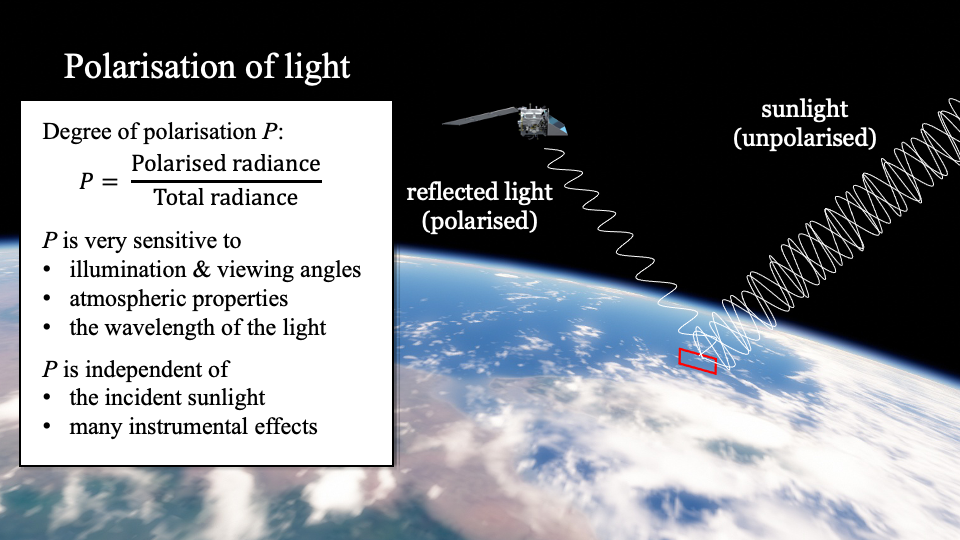
Introductory slide explaining how unpolarised sunlight becomes polarised after reflection by Earth
Introductory diagram by Victor Trees: unpolarised sunlight becomes polarised after reflection by Earth. The slide includes a PACE observatory visual (Credit: NASA/PACE) and a SpaceEngine Earth background by Victor Trees.
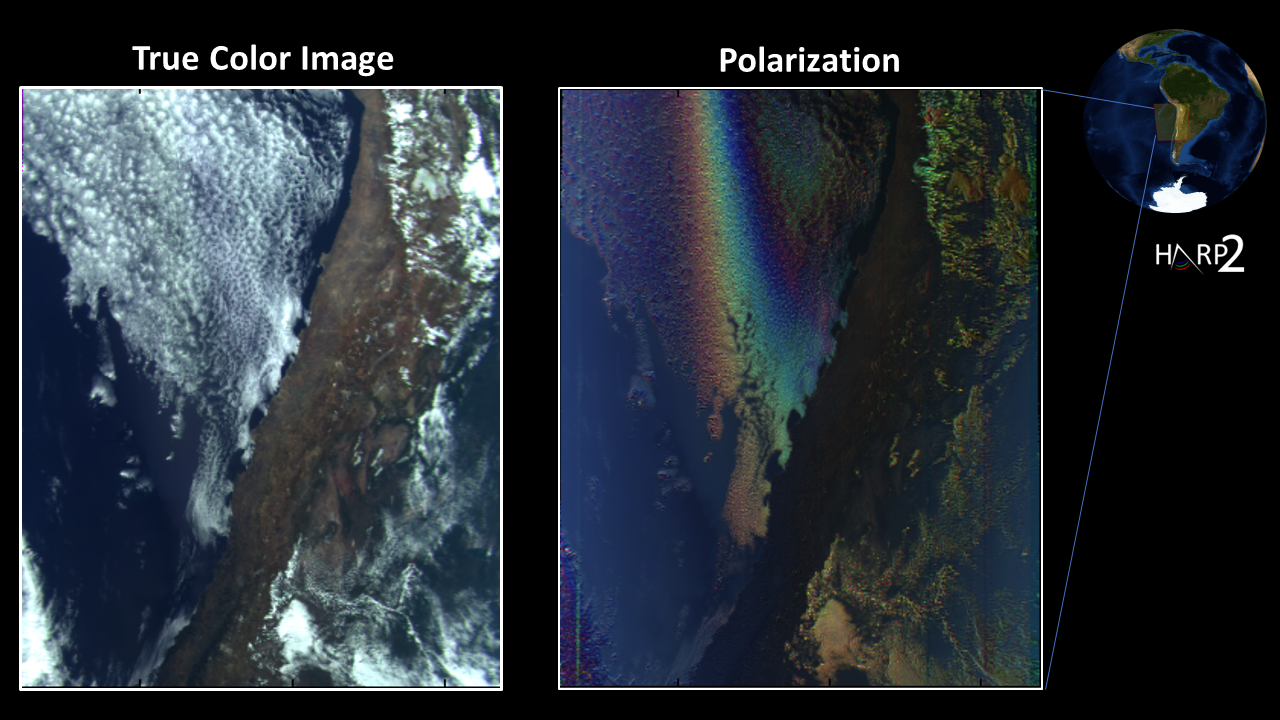
HARP2 first-light image over the west coast of South America showing true colour and polarisation
HARP2 first-light example over the west coast of South America. Polarisation reveals a cloudbow produced by liquid-water cloud droplets. Credit: UMBC / HARP2 team, used with permission. Original UMBC story.
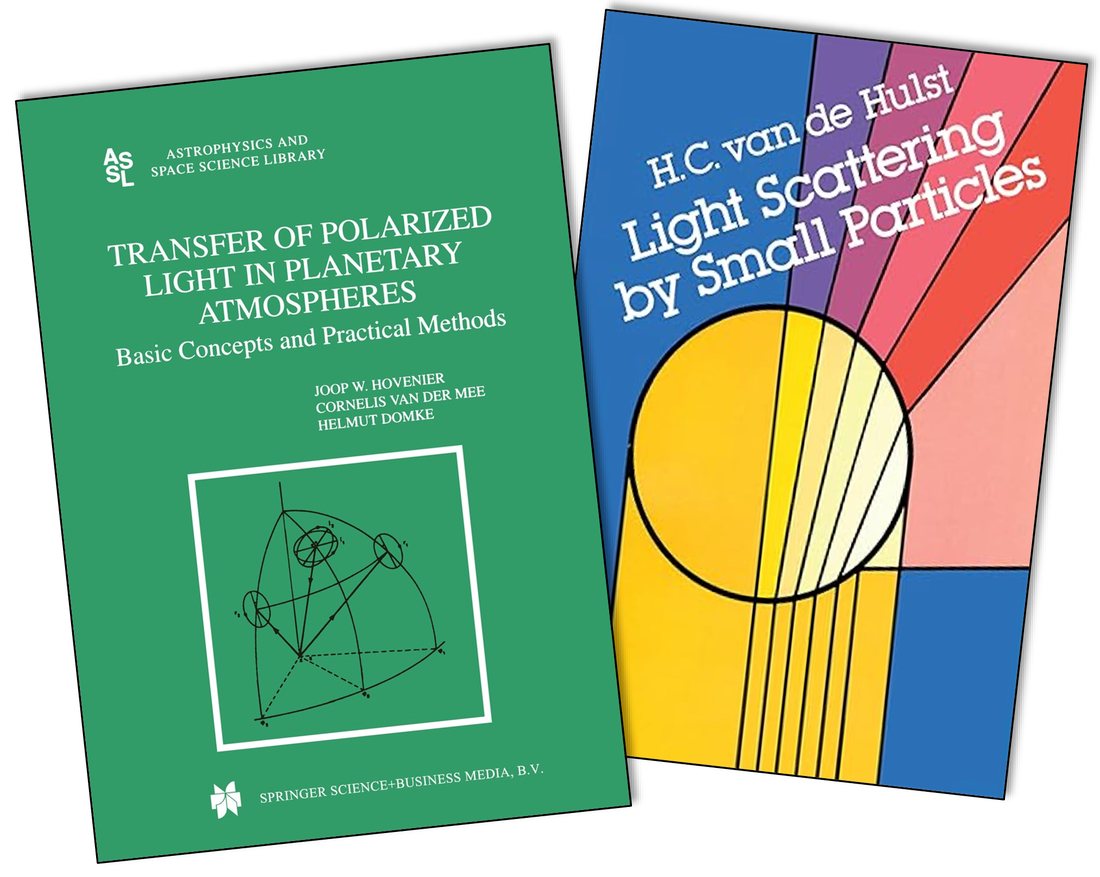
Book covers of Transfer of Polarized Light in Planetary Atmospheres and Light Scattering by Small Particles
Fundamental references in light scattering and polarised radiative transfer: Hovenier et al. and Van de Hulst.

Methodological foundation

Polarised radiative transfer

What is polarisation of light?

Light is an electromagnetic wave. In ordinary sunlight or starlight, the electric field oscillates in many directions, so the light is effectively unpolarised. After scattering by molecules or cloud particles, or reflection by a surface such as an ocean, some directions become preferred and the light becomes partly polarised. The first figure above summarises this idea and shows the degree of polarisation, P: the fraction of polarised radiance relative to the total radiance.

Why is it useful?

Polarisation often carries information that brightness and colour alone do not. It is sensitive to wavelength, illumination and viewing geometry, and to the size, shape, and composition of particles and surfaces. Because the degree of polarisation is a relative quantity, it is also less sensitive to the absolute brightness of the incoming sunlight and to several instrumental effects.

What can it reveal?

The HARP2 image above shows this added value directly. The true colour panel shows the cloud field off the west coast of South America, while the polarisation panel reveals a bright cloudbow. Such a cloudbow is produced by nearly spherical liquid water droplets, so it tells us that these are liquid water clouds. The detailed signal can then be used to constrain droplet size and cloud microphysics. The same basic idea also works beyond Earth. A classic example is Venus: Hansen and Hovenier (1974) used polarisation measurements of Venus as a whole planet, at different phase angles, to show that the main Venus clouds are made of sulfuric-acid droplets.

Why simulate it?

To make full use of polarisation measurements, observations need to be linked back to physics. Polarised radiative-transfer simulations describe how light changes as it is scattered and absorbed in an atmosphere and reflected by the surface. They are needed to interpret satellite and telescope data, to design and test future instruments, and to explore how clouds, oceans, habitability, and possible biosignatures could appear in reflected light. MONKI was developed for this purpose, including for atmospheres with three-dimensional cloud structures.

Dutch scientific context

This work builds on a strong Dutch tradition in optics, light scattering, and polarimetry. Christiaan Huygens (1629-1695) formulated an early wave theory of light and used it to explain phenomena such as reflection, refraction, and double refraction. Professor Marcel Minnaert (1893-1970) connected optics, astronomy, and atmospheric phenomena. Professor Henk van de Hulst (1918-2000) made fundamental contributions to the theory of light scattering by small particles. Professor Joop Hovenier (1936-2024) developed much of the modern theory of polarised radiative transfer in planetary atmospheres.

More recently, Dr Johan de Haan and Dr Piet Stammes made important contributions to polarimetry and radiative transfer at KNMI. Dr Daphne Stam laid important foundations for the use of polarimetry in Earth observation, planetary science, and exoplanet science, and supervised my master’s thesis on exoplanet polarimetry. Dr Ping Wang supervised my PhD work at KNMI. Much of my own understanding of polarisation comes from Hovenier’s Transfer of Polarized Light in Planetary Atmospheres, together with the classic review by Hansen and Travis (1974).
Research themes

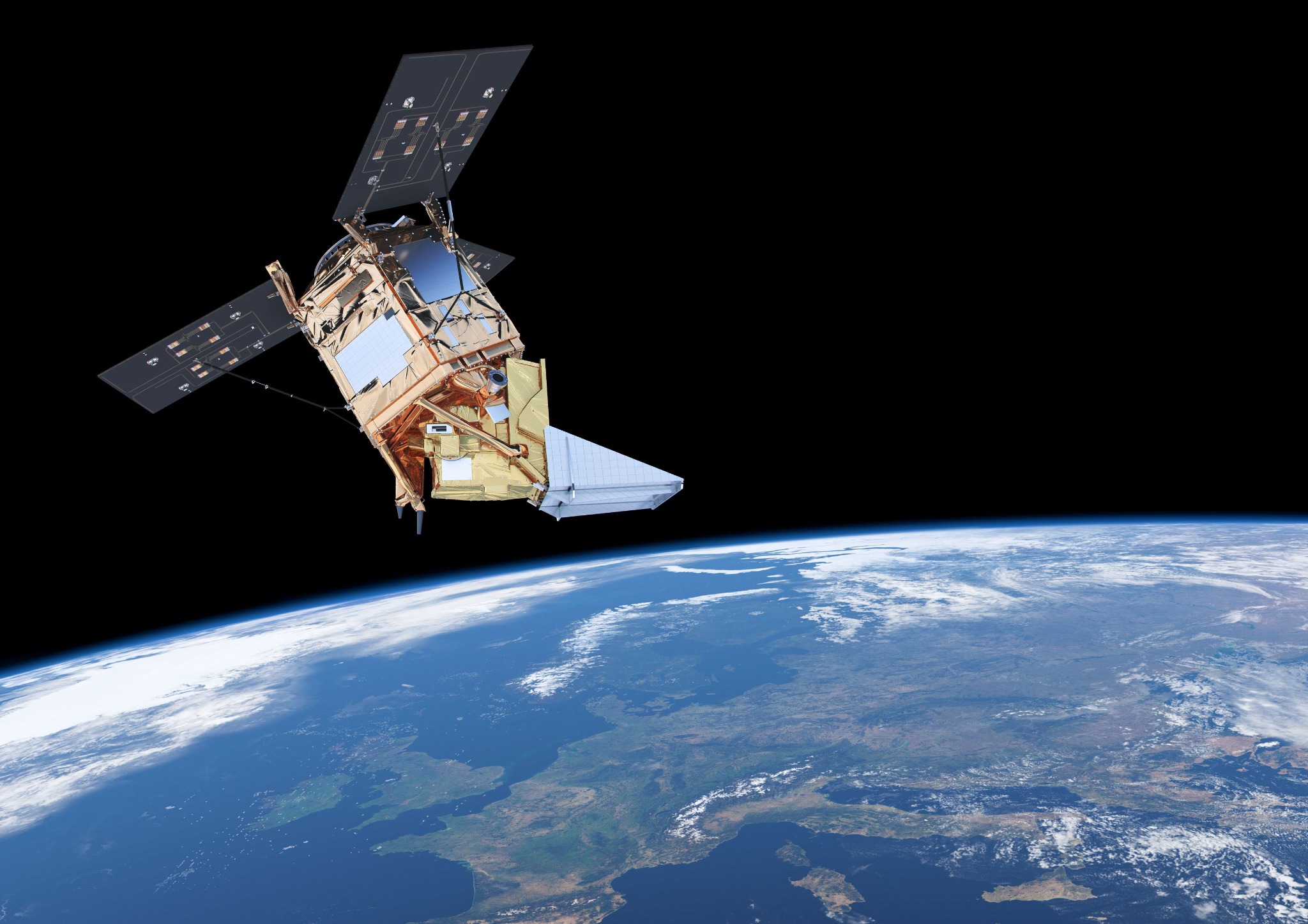
Artist impression of Copernicus Sentinel-5P carrying TROPOMI observing Earth
Copernicus Sentinel-5P carrying TROPOMI observing the Earth's atmosphere. Credit: ESA/ATG medialab.

Earth observation

Clouds, aerosols, air quality, and radiative transfer in satellite data

Clouds are strong regulators of the Earth's radiative balance and play a key role in the hydrological cycle by controlling precipitation and evaporation. Air quality is shaped by short-lived trace gases such as O3 and NO2, and by aerosols that affect human health, visibility, weather, and climate.

Satellite observations are essential because they provide consistent information over large parts of the globe. KNMI is not only a weather institute, but also a leading centre for monitoring air quality, clouds, aerosols, ozone, winds, and radiation from space. Its satellite observation work includes calibration and retrieval algorithms, data processing, and products from missions such as OMI, TROPOMI, GOME-2, SEVIRI, and EarthCARE.

During my PhD at TU Delft and KNMI, I developed DARCLOS to detect cloud shadows in TROPOMI data and a method to recover satellite measurements during solar eclipses. These methods help interpret scenes where the measured radiation field is shaped by three-dimensional clouds, aerosols, and shadows. The eclipse correction also made it possible to study how shallow cumulus clouds respond when sunlight is temporarily reduced.

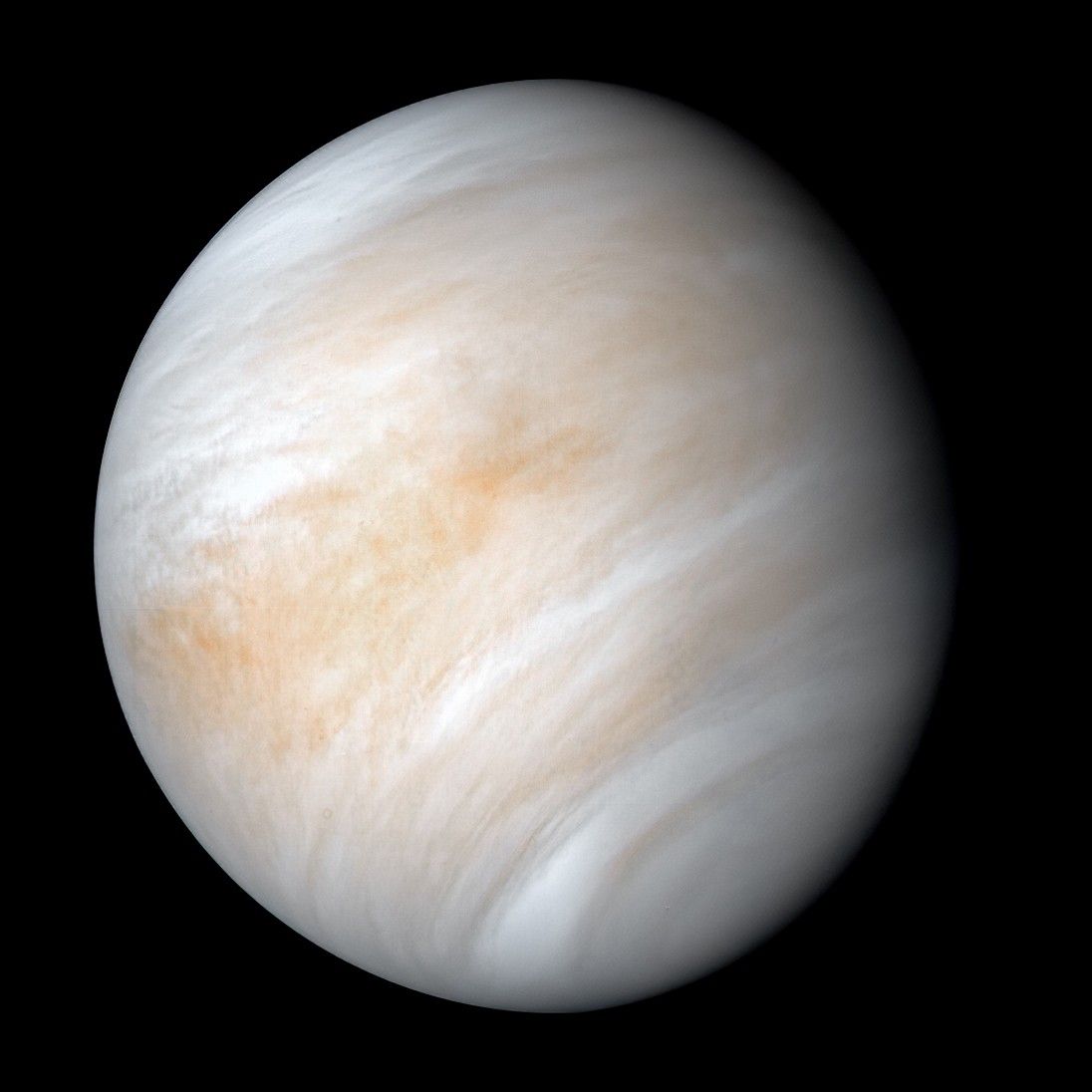
Venus as seen by NASA's Mariner 10 spacecraft
Venus as seen by NASA's Mariner 10 spacecraft. Credit: NASA/JPL-Caltech.

Venus

Spectropolarimetry for ESA's EnVision mission

Venus is our nearest planetary neighbour and is similar to Earth in age, bulk composition, mass, and size. Yet it evolved into a very different world: its thick atmosphere consists mostly of CO2, the surface is about 465 degrees Celsius, there is no liquid water, and the clouds consist of sulfuric acid. Why did Venus evolve so differently from Earth?

ESA's EnVision mission, planned for launch in the 2030s, will address this question. Its VenSpec-U and VenSpec-H spectrometers will measure ultraviolet and near-infrared sunlight reflected by Venus. These measurements constrain cloud properties that are important for chemistry, dynamics, and climate in Venus's atmosphere.

Both spectrometers are also sensitive to the polarisation of reflected sunlight. Because polarisation depends strongly on the microphysical and large-scale properties of Venus's clouds, MONKI simulations help connect the future measurements to the physical structure of the atmosphere.

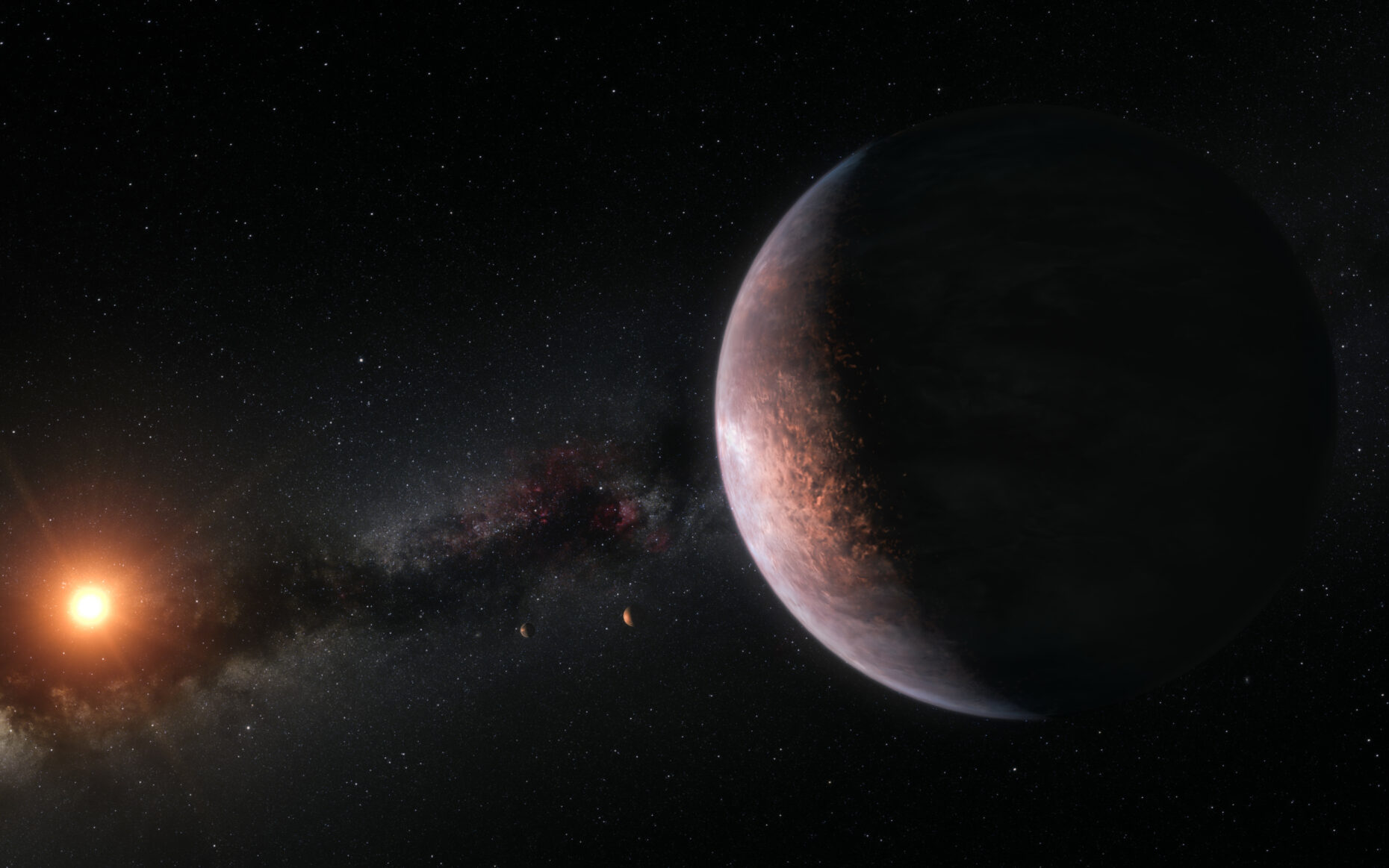
Artist's impression of the TRAPPIST-1 planetary system
Artist's impression of the TRAPPIST-1 planetary system. Credit: ESO/M. Kornmesser.

Earth-like exoplanets

Oceans and clouds in reflected starlight

Exoplanets are planets beyond our solar system. The discovery of liquid water on an Earth-like exoplanet would be a milestone in the search for life, because liquid water is essential for life as we know it. Future telescopes will search for signs of oceans, clouds, vegetation, and atmospheric gases by analysing the spectrum and polarisation of reflected starlight.

Because these planets will be seen as faint, unresolved points of light, simulations are needed to know what to look for. I simulate how the disk-integrated signal of an Earth-like planet changes with wavelength, time, phase angle, cloud cover, surface type, and ocean conditions. This helps test when signatures such as ocean glint or polarisation from liquid water clouds could be detectable.

My exoplanet work predicted ways to detect liquid water oceans using polarised reflected light. These simulations were later used in a study of how NASA's Habitable Worlds Observatory concept could detect such signatures around other worlds.

Connecting idea

One physics problem, three planetary settings

Earth provides detailed observations and direct applications for radiative-transfer modelling, Venus provides a nearby extreme atmosphere with clouds and gases unlike Earth’s, and exoplanets provide the long-term challenge of interpreting weak reflected-light signals from distant worlds. Across these settings, the central question remains the same: what does measured light tell us about the atmosphere and surface that produced it?