First-principles derivation
Deriving the equations for polarised radiative transfer from the underlying physics, rather than treating the model as a black box.
I develop numerical methods that turn polarised-light physics into simulations of planetary atmosphere observations. The centrepiece is MONKI: a three-dimensional Monte Carlo radiative-transfer code written in Fortran.
Deriving the equations for polarised radiative transfer from the underlying physics, rather than treating the model as a black box.
Translating the physics into robust Fortran code, including photon-path sampling, scattering events, Stokes-vector bookkeeping, absorption, and statistical convergence.
Comparing model output with established radiative-transfer benchmarks and using discrepancies to improve the method and implementation.
Using simulations to explain why specific radiance and polarisation features appear in Earth-observation, Venus, and exoplanet signals.
MONKI · 3D Monte Carlo radiative transfer
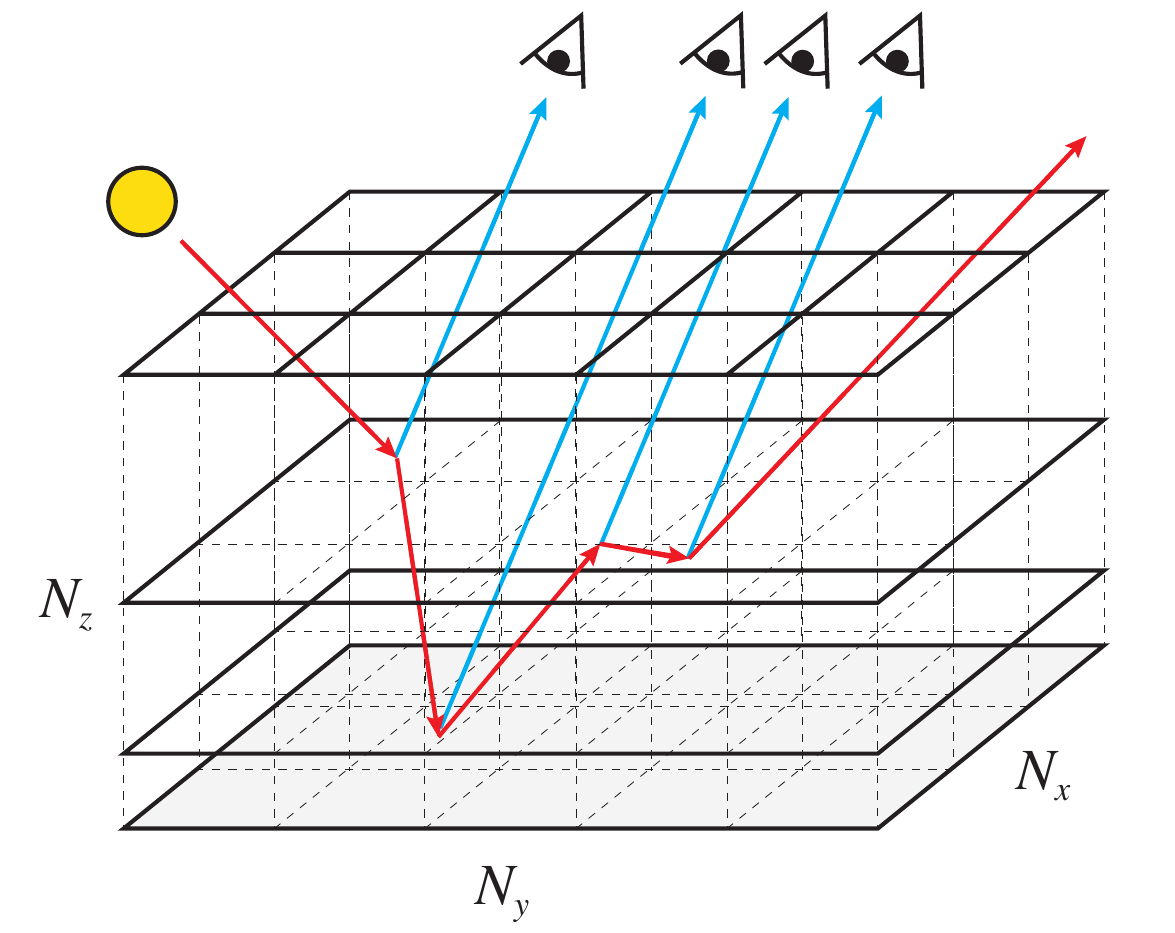
MONKI is the central code development in my work: a three-dimensional Monte Carlo radiative-transfer model for total and polarised radiation reflected and transmitted by planetary atmospheres. I wrote the Fortran code from scratch, including the photon sampling, local-estimation method, polarisation bookkeeping, absorption treatment, and parallel execution needed for large atmospheric simulations.
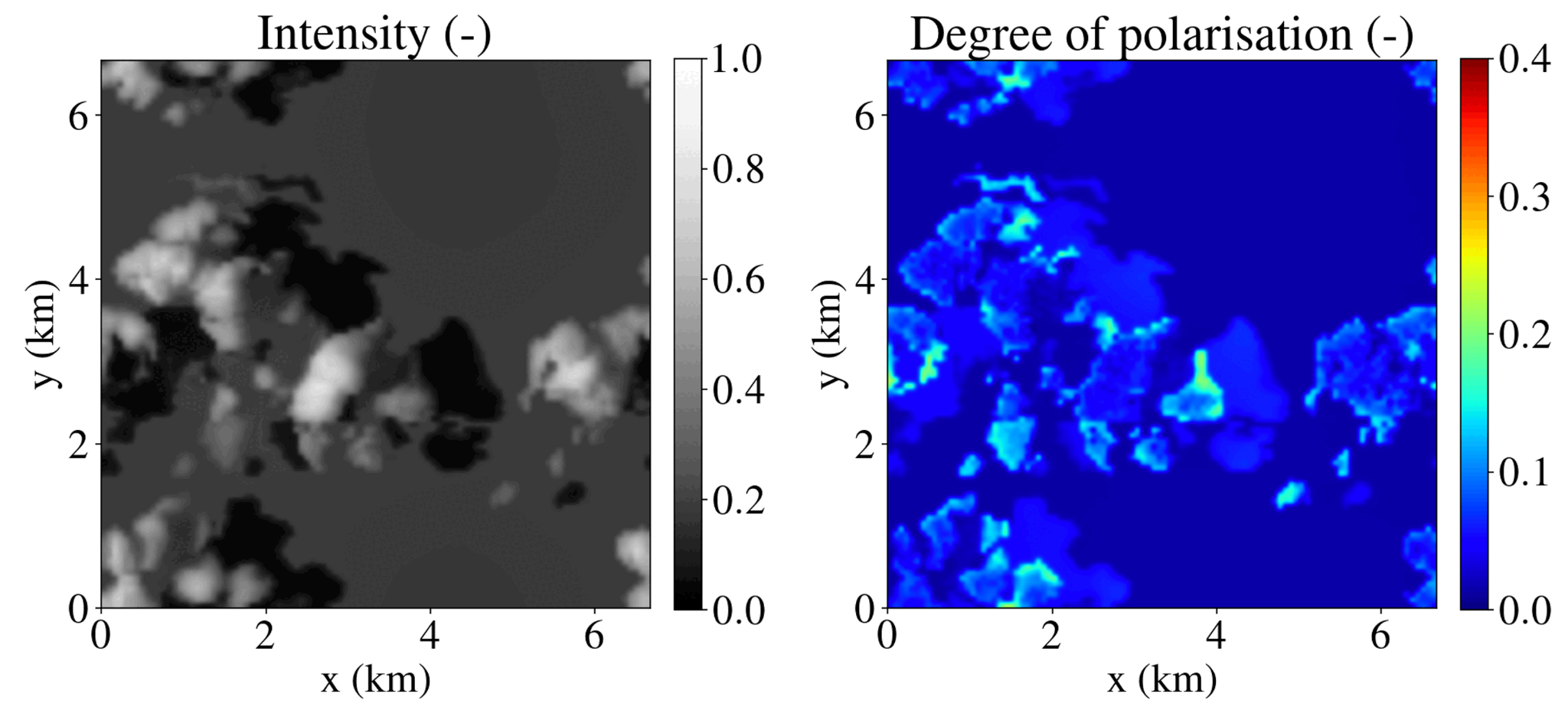
The code can be used for horizontally homogeneous atmospheres and for fully three-dimensional scenes, such as cloud fields from 3D cloudy atmospheric models, including large-eddy simulations. MONKI is currently used mainly for Earth and Venus applications, where it computes total and polarised light reflected and transmitted by complex planetary atmospheres.
DARCLOS · TROPOMI cloud-shadow detection
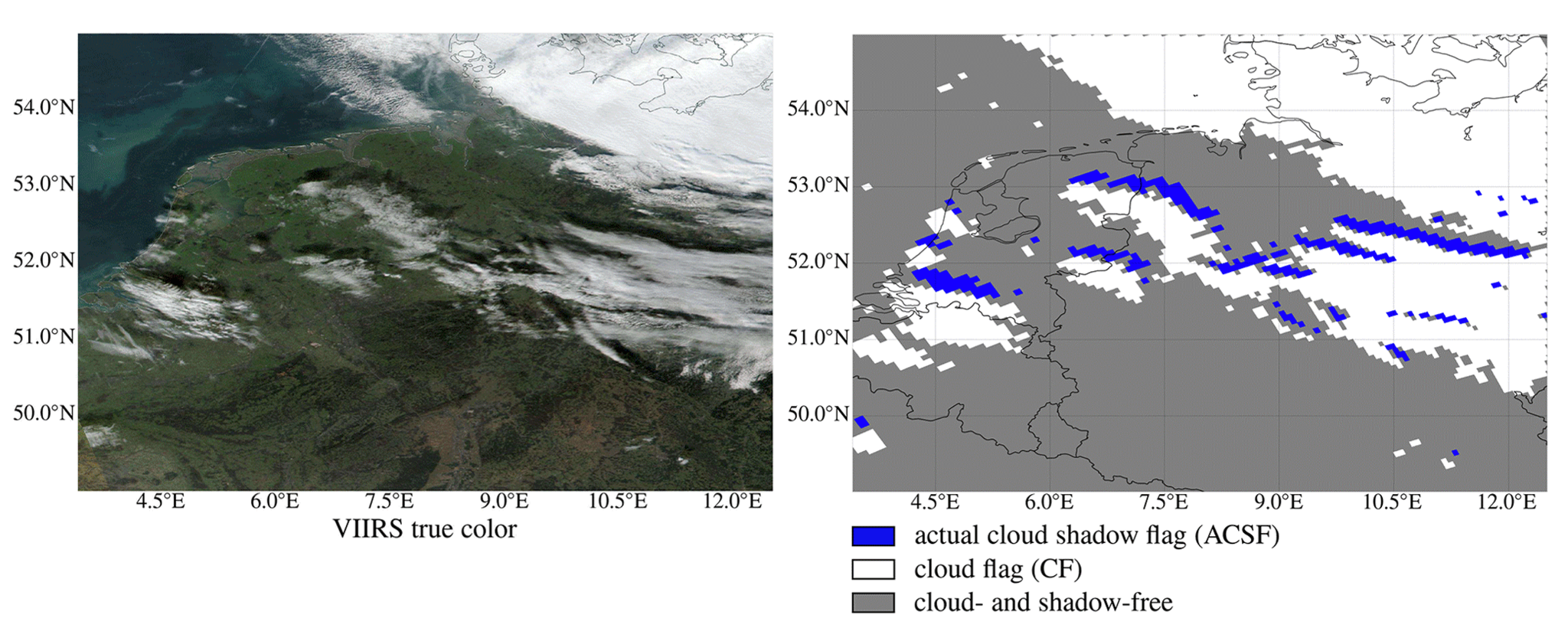
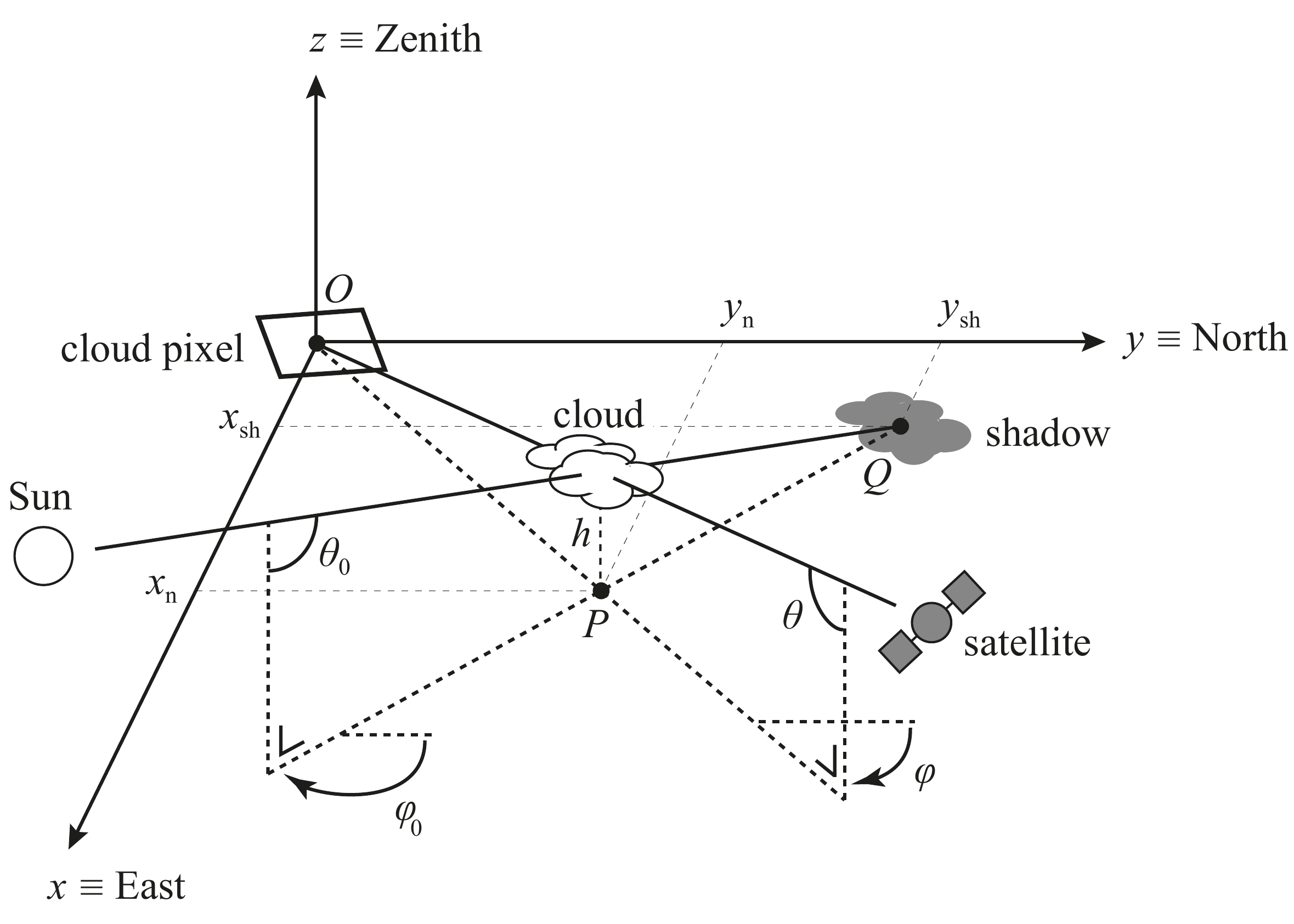
DARCLOS is a cloud-shadow detection method for TROPOMI. It uses the geometry of the Sun, cloud height, surface location, and satellite viewing direction to estimate where a cloud shadow should appear on the Earth’s surface, even though the cloud itself is observed at a different apparent location by the satellite.
The resulting cloud-shadow flag helps identify scenes where three-dimensional cloud effects influence measured reflectances and derived atmospheric products. This connects directly to my Earth-observation work on aerosols, surface reflectance, and the physical interpretation of satellite measurements.
Solar-eclipse correction · Reflectance restoration
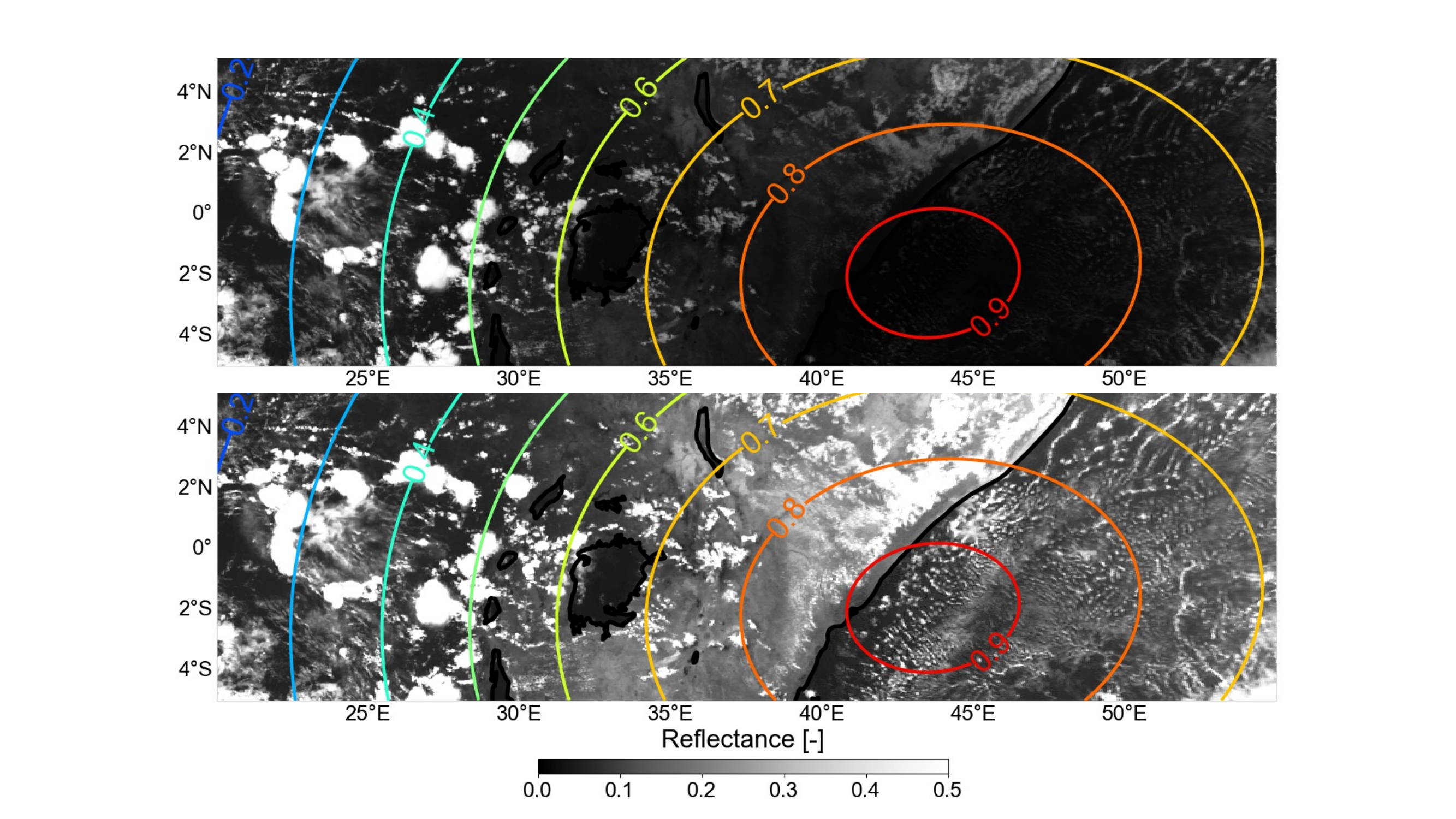
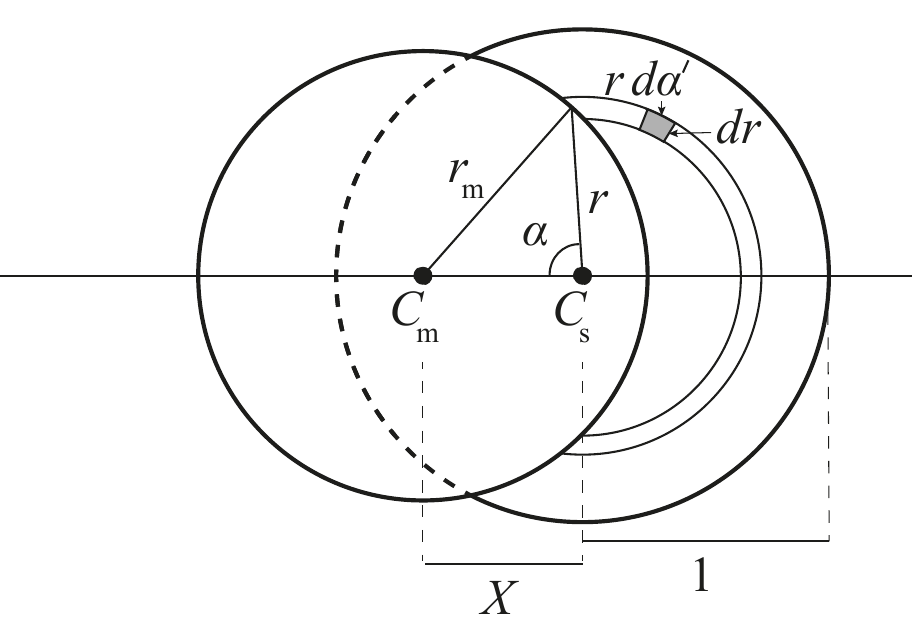
The solar-eclipse correction method computes how much of the solar disk is blocked by the Moon for each satellite pixel and uses that geometry to recover satellite measurements. This turns eclipse scenes from problematic observations into usable measurements of the atmosphere inside the Moon’s partial shadow.
I developed this correction to investigate how reduced sunlight affects measured radiation fields. It later made it possible to study the rapid response of shallow cumulus clouds to solar eclipses.