Selected publications

For my first-author journal papers, I give a short explanation of the figure and why the result matters. Co-authored papers, conference contributions, and preprints are kept shorter.

For a complete and continuously updated list, see Google Scholar, ORCID, or NASA ADS from the contact page.

2026 路 Atmospheric Chemistry and Physics

Errors in satellite-based global horizontal irradiance retrievals due to three-dimensional cloud-radiation interactions

Job I. Wiltink, Victor J. H. Trees, Chiel C. van Heerwaarden, and Jan Fokke Meirink

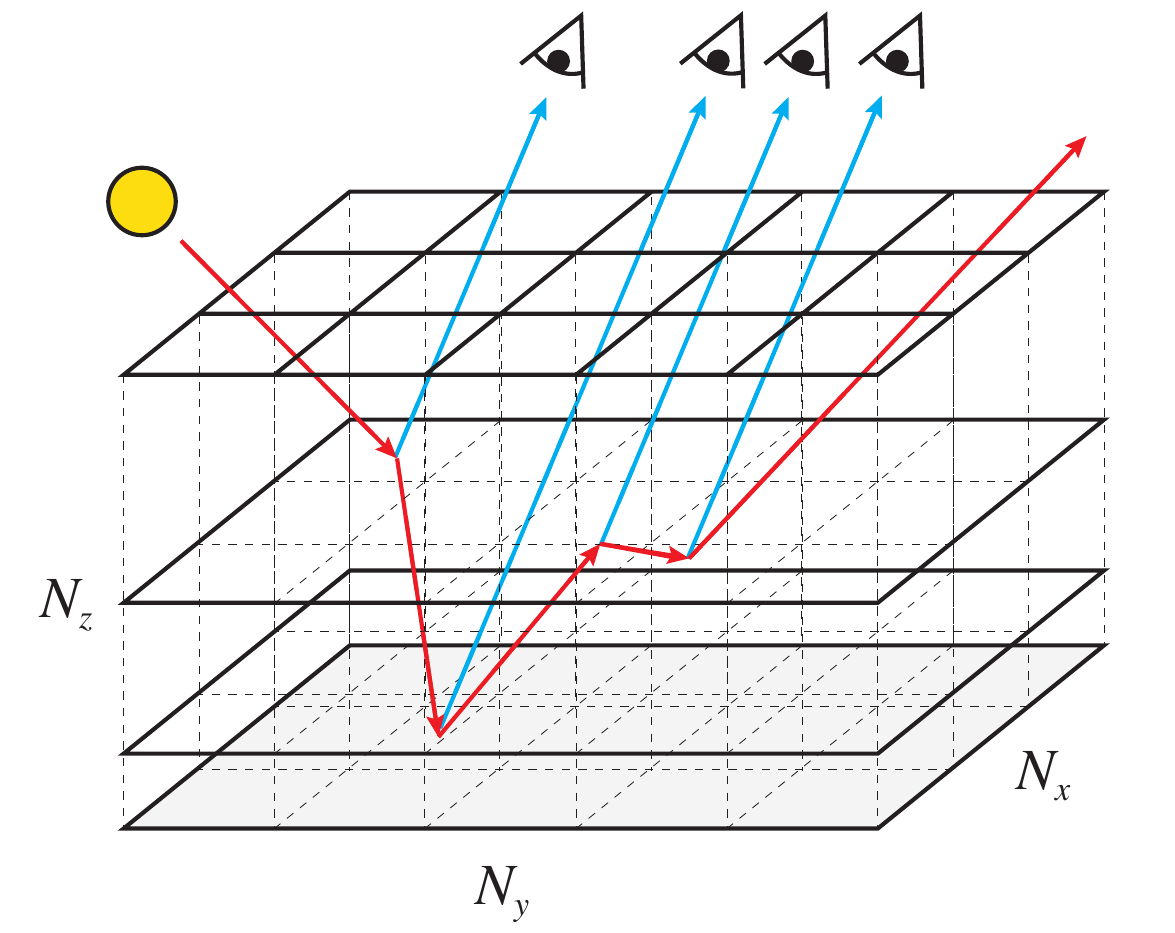
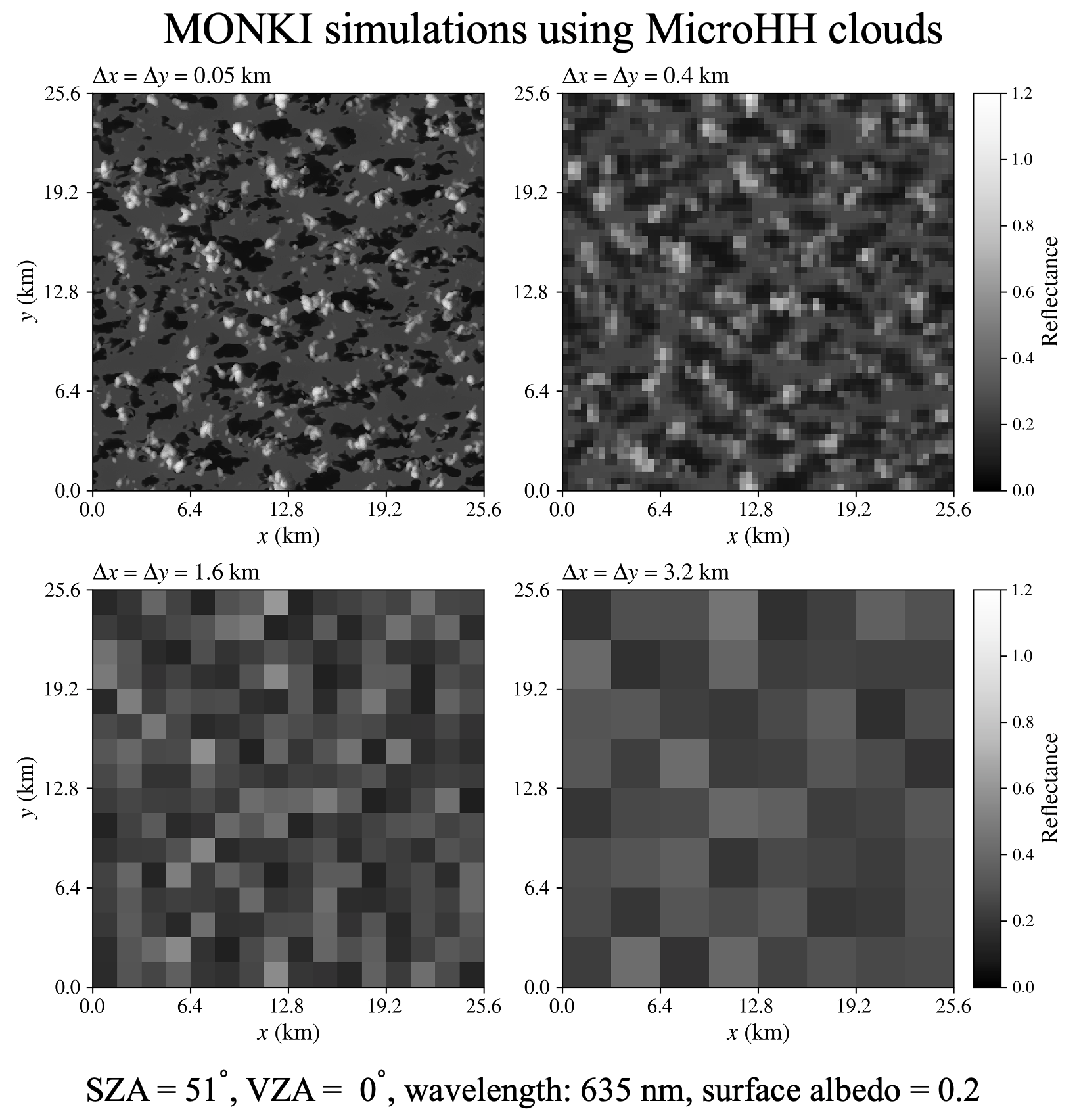
This study uses MONKI to quantify how three-dimensional cloud-radiation interactions affect satellite retrievals of global horizontal irradiance. It shows how horizontal photon transport and unresolved cloud variability can introduce retrieval errors, especially in highly variable cumulus scenes.

MONKI simulations using MicroHH cloud fields at different horizontal resolutions
MONKI simulations with cloud fields from MicroHH, a large-eddy simulation cloud model, at different horizontal resolutions. Figure adapted from Wiltink et al. (2026).

2025 路 Atmospheric Measurement Techniques

Cancellation of cloud shadow effects in the absorbing aerosol index retrieval algorithm of TROPOMI

Victor J. H. Trees, Ping Wang, Piet Stammes, L. G. Tilstra, David P. Donovan, and A. Pier Siebesma

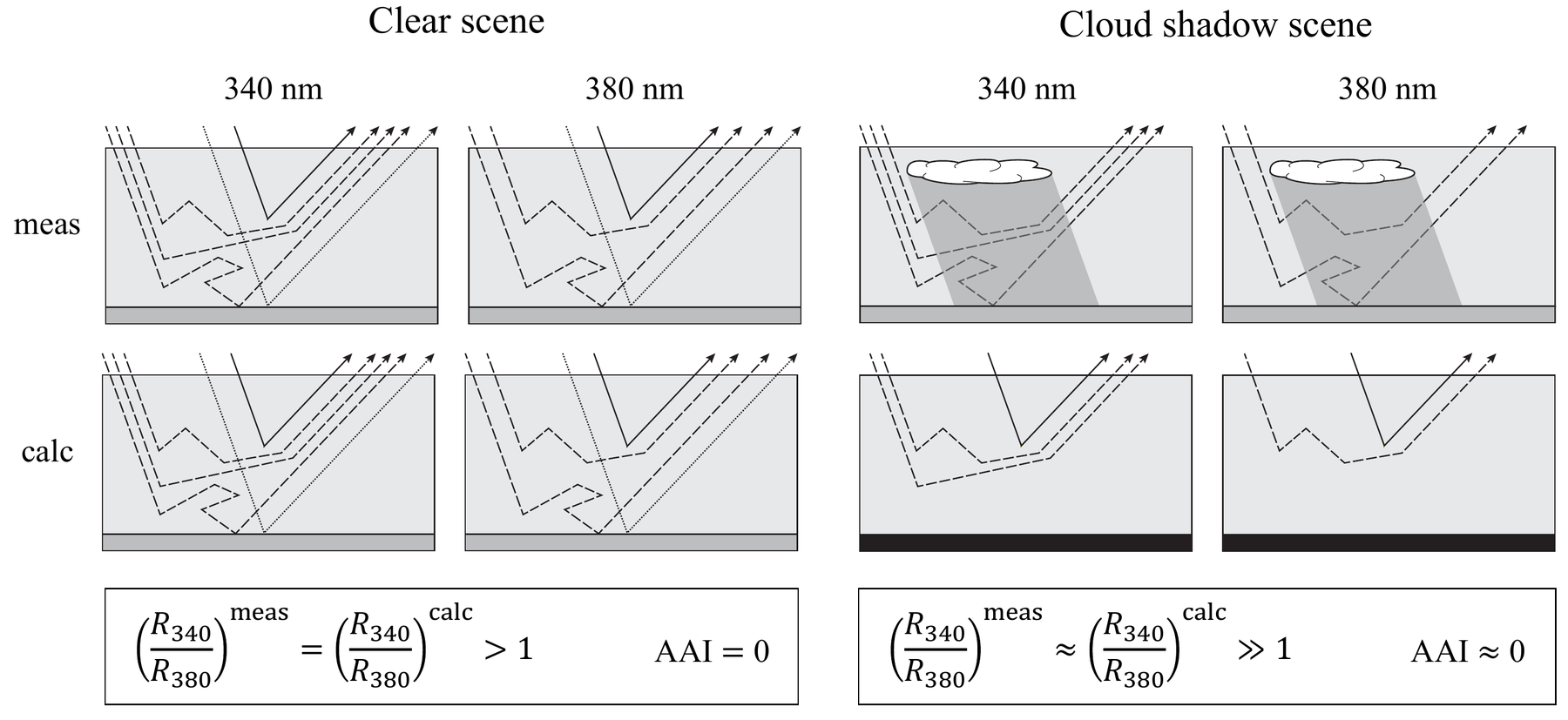
This paper investigates why cloud shadows can affect satellite reflectances but largely cancel in the TROPOMI absorbing aerosol index. It connects 3D shadowing physics to a practical Earth-observation retrieval quantity.

Conceptual illustration of cancellation of cloud-shadow effects in the TROPOMI absorbing aerosol index
Conceptual illustration of why cloud-shadow effects can cancel in the TROPOMI absorbing aerosol index. Figure adapted from Trees et al. (2025).

2024 路 Communications Earth & Environment

Clouds dissipate quickly during solar eclipses as the land surface cools

Victor J. H. Trees, S. R. de Roode, Job I. Wiltink, J. F. Meirink, Ping Wang, Piet Stammes, and A. Pier Siebesma

Solar eclipses were used as controlled sunlight-perturbation experiments to test how shallow cumulus clouds respond to a temporary reduction in sunlight. The restored satellite data show that low clouds can dissipate rapidly when the land surface cools.

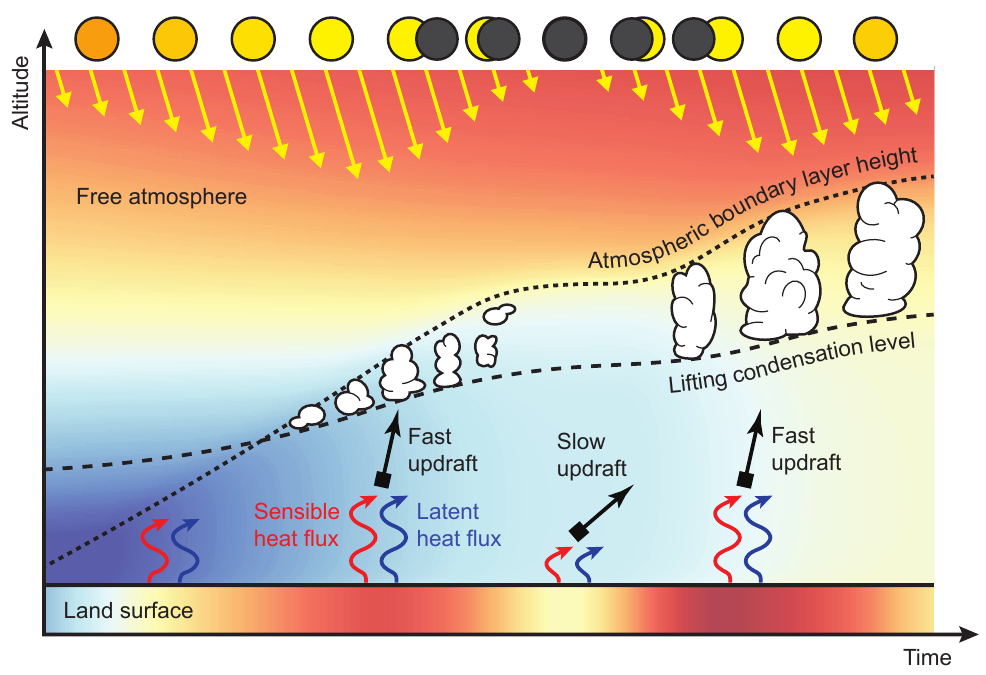
What the figure shows. The figure shows the physical mechanism behind the discovery. As the Moon removes sunlight, the land surface cools, turbulent heat fluxes weaken, updrafts slow down, and shallow cumulus clouds lose the energy supply that keeps them alive.

Why it matters. The result matters beyond eclipses. We found from corrected satellite data and large-eddy simulations that low clouds over land can respond to surprisingly small reductions in sunlight. That makes the paper relevant to sunlight-reduction geoengineering: if reducing sunlight also removes reflective low clouds, part of the intended cooling could be offset.

Conceptual model of surface cooling and shallow-cumulus response during a solar eclipse
Conceptual model of how reduced sunlight during a solar eclipse changes land-surface heating and shallow-cumulus development. Figure adapted from Trees et al. (2024).

2024 路 Atmospheric Measurement Techniques

A directional surface reflectance climatology determined from TROPOMI observations

L. G. Tilstra, M. de Graaf, Victor J. H. Trees, P. Litvinov, O. Dubovik, and Piet Stammes

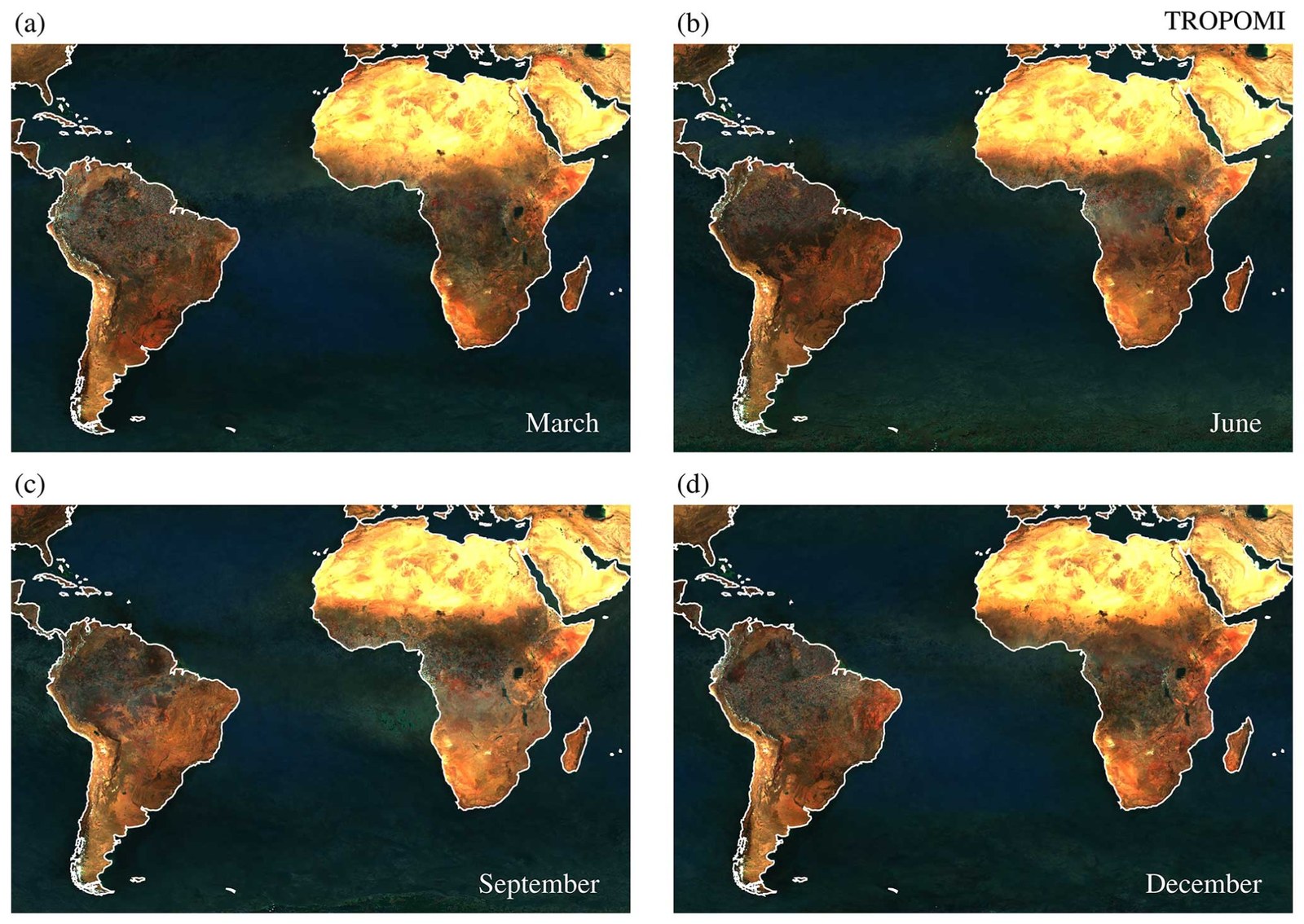
This work uses TROPOMI observations to construct a directional surface-reflectance climatology. My cloud-shadow flag contributed to the quality control of the resulting Earth-observation product.

Seasonal maps from the TROPOMI directional surface-reflectance climatology
Seasonal maps from the TROPOMI directional surface-reflectance climatology. Figure adapted from Tilstra et al. (2024).

2022 路 Atmospheric Measurement Techniques

DARCLOS: a cloud shadow detection algorithm for TROPOMI

Victor J. H. Trees, Ping Wang, Piet Stammes, L. G. Tilstra, David P. Donovan, and A. Pier Siebesma

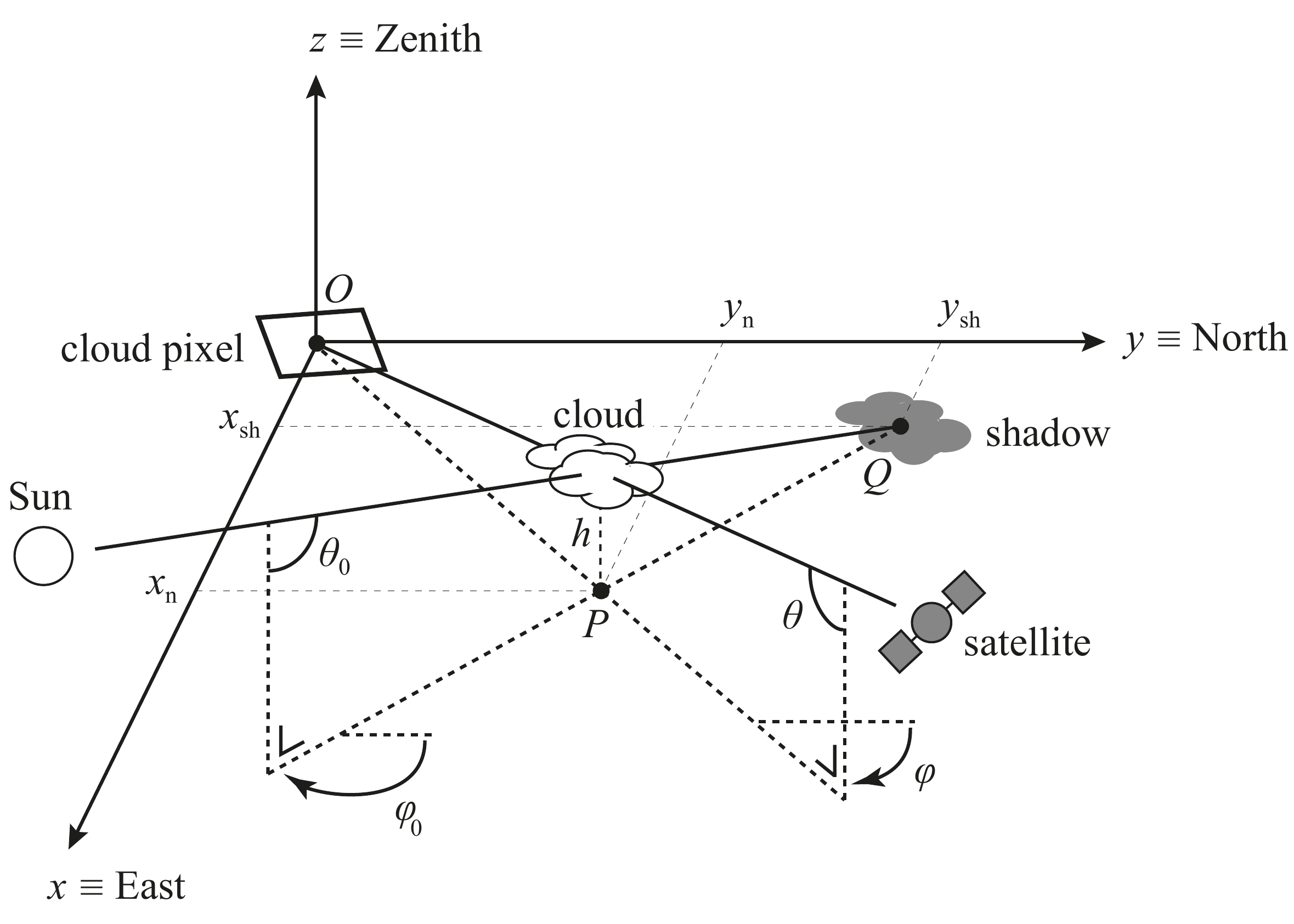
DARCLOS detects cloud shadows in TROPOMI data. It is part of the Earth-observation side of my work: identifying when three-dimensional cloud geometry affects what a satellite observes.

What the figure shows. The figure shows the geometry that DARCLOS uses. The cloud seen by TROPOMI, the actual elevated cloud position, the Sun direction, and the displaced shadow on the surface are all linked in one local coordinate frame.

Why it matters. This matters because cloud shadows are not random dark pixels: they are predictable 3D radiative-transfer features. DARCLOS turns that geometry into a practical detection algorithm, allowing cloud-shadow scenes to be flagged and used more carefully in TROPOMI products.

Sketch of the cloud-shadow geometry used in DARCLOS
Cloud-shadow geometry used in DARCLOS. Figure adapted from Trees et al. (2022).

2021 路 Atmospheric Chemistry and Physics

Restoring the top-of-atmosphere reflectance during solar eclipses

Victor Trees, Ping Wang, and Piet Stammes

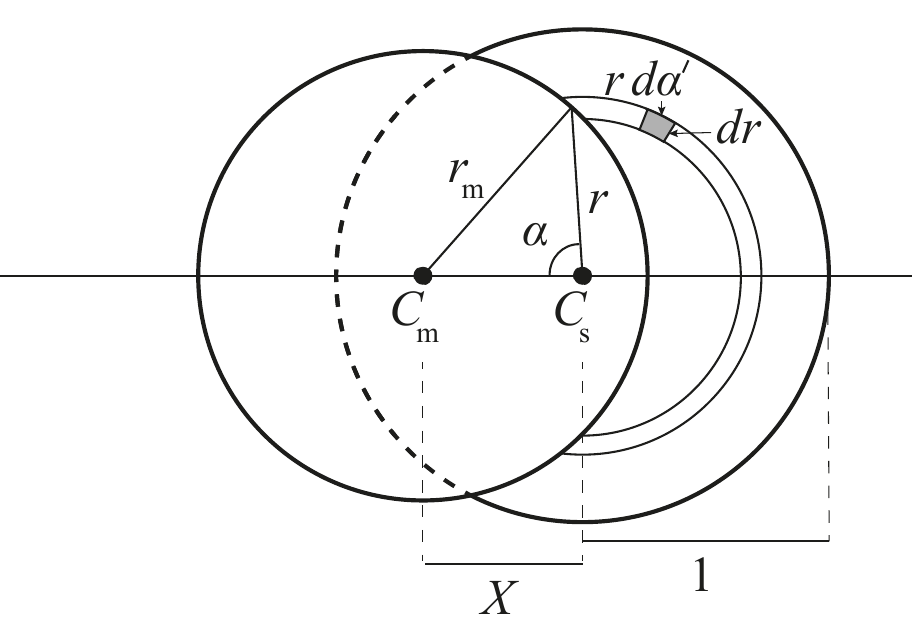
This paper introduced a method to correct satellite reflectances during solar eclipses. It made it possible to use eclipse observations as controlled sunlight-perturbation experiments instead of discarding them as contaminated data.

What the figure shows. The figure shows the solar and lunar disk geometry used to compute how much of the Sun is hidden during an eclipse. The method also accounts for where on the solar disk the light comes from, which matters because of solar limb darkening.

Why it matters. This paper made eclipse-affected satellite data scientifically usable. Instead of discarding the Moon shadow as a retrieval artefact, the correction recovers satellite measurements and opened the way to using eclipses as controlled controlled sunlight-perturbation experiments in atmospheric science.

Sketch of the solar and lunar disk geometry used in the eclipse-correction method
Solar and lunar disk geometry used in the eclipse-correction method. Figure adapted from Trees et al. (2021).

2020 路 Atmospheric Measurement Techniques

Effects of clouds on the UV Absorbing Aerosol Index from TROPOMI

M. L. Kooreman, Piet Stammes, Victor Trees, M. Sneep, L. G. Tilstra, M. de Graaf, D. C. Stein Zweers, Ping Wang, O. N. E. Tuinder, and J. P. Veefkind

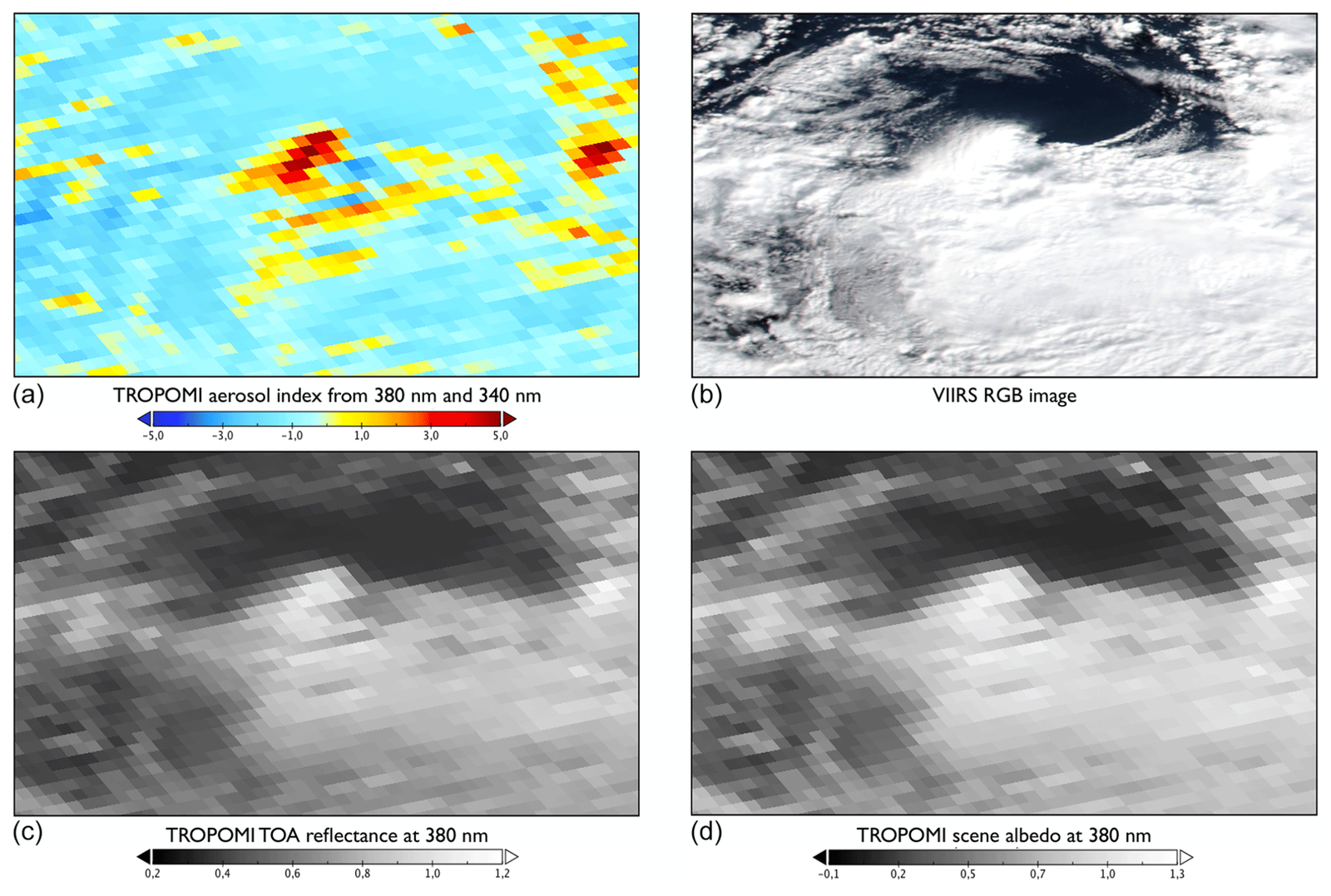
This paper studies how clouds influence the UV Absorbing Aerosol Index. It provides the broader TROPOMI context for my later work on cloud shadows and aerosol-index interpretation.

TROPOMI aerosol index, VIIRS imagery, and reflectance/albedo maps showing cloud effects
TROPOMI aerosol index, cloud images, and UV reflectance fields illustrating cloud effects on the absorbing aerosol index. Figure adapted from Kooreman et al. (2020).

2025 路 EGU General Assembly

Modelling Venus's spectropolarimetric signatures for EnVision

Victor J. H. Trees and collaborators

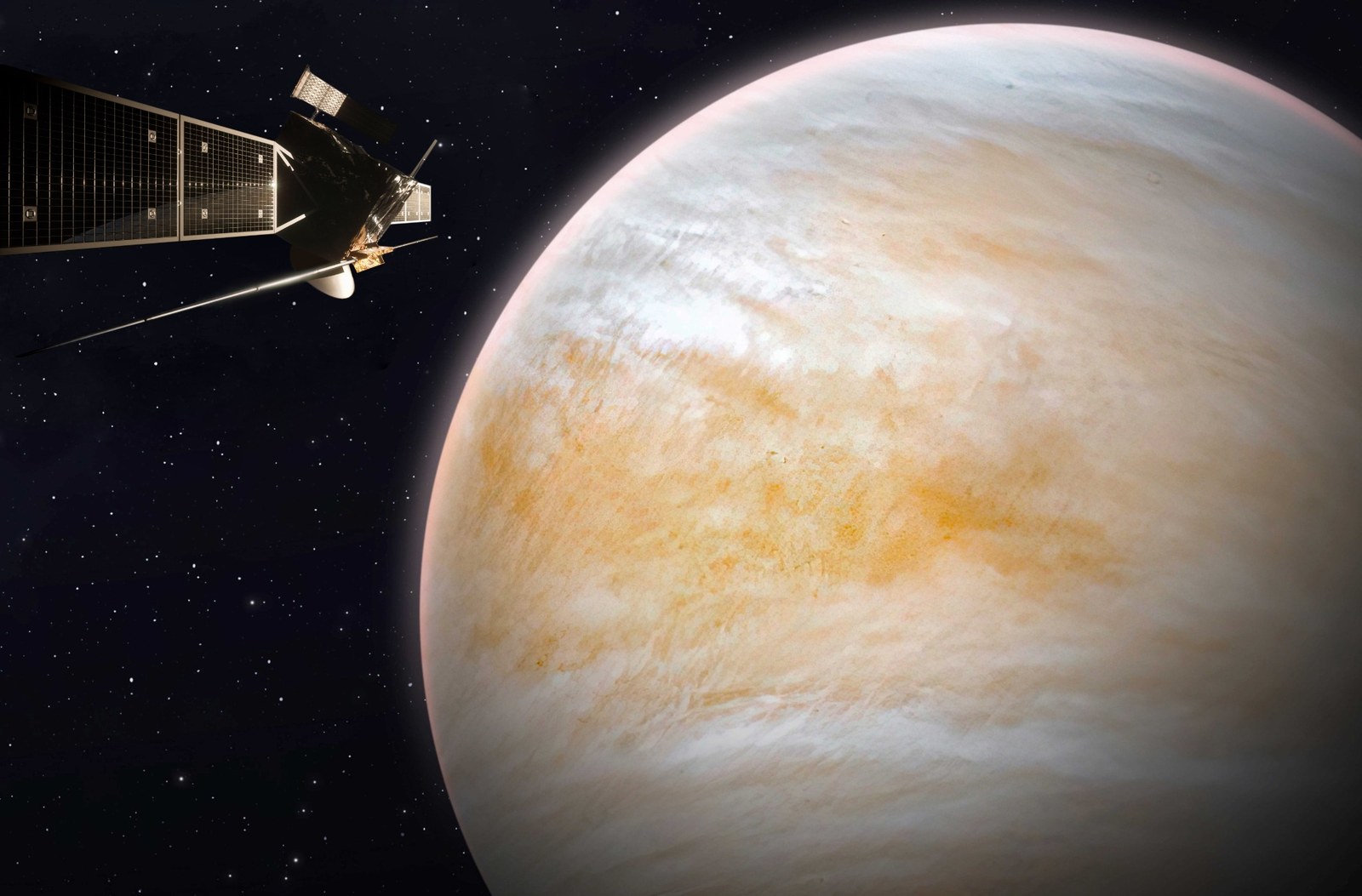
This conference contribution presents simulations of Venus reflected-light spectra and polarisation relevant to ESA's EnVision mission, especially the VenSpec-H and VenSpec-U instruments.

Artist impression of ESA's EnVision mission at Venus
Artistieke impressie van ESA鈥檚 EnVision-missie bij Venus. Credit: ESA/Paris Observatory/VR2Planets & NASA/JPL-Caltech.

2023 路 Monthly Notices of the Royal Astronomical Society

Chasing rainbows and ocean glints: inner working angle constraints for NASA's Habitable Worlds Observatory

S. R. Vaughan, T. D. Gebhard, K. Bott, S. L. Casewell, N. B. Cowan, D. S. Doelman, M. Kenworthy, J. Mazoyer, M. A. Millar-Blanchaer, Victor J. H. Trees, D. M. Stam, et al.

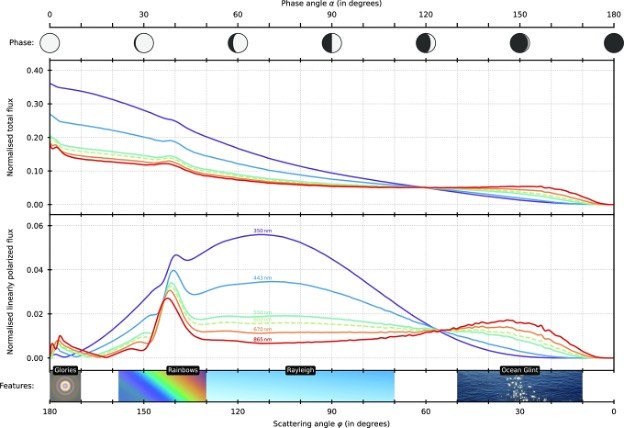
This work connects ocean signatures in reflected light to telescope design requirements for future direct-imaging missions. My contribution included simulation results relevant to ocean glints and polarimetric observability.

Predicted reflected-light features for NASA's Habitable Worlds Observatory including ocean glint and rainbows
Reflected-light features relevant to NASA's Habitable Worlds Observatory, including rainbows, Rayleigh scattering, and ocean glint. Figure adapted from Vaughan et al. (2023).

2022 路 Astronomy & Astrophysics

Ocean signatures in the total flux and polarization spectra of Earth-like exoplanets

Victor J. H. Trees and Daphne M. Stam

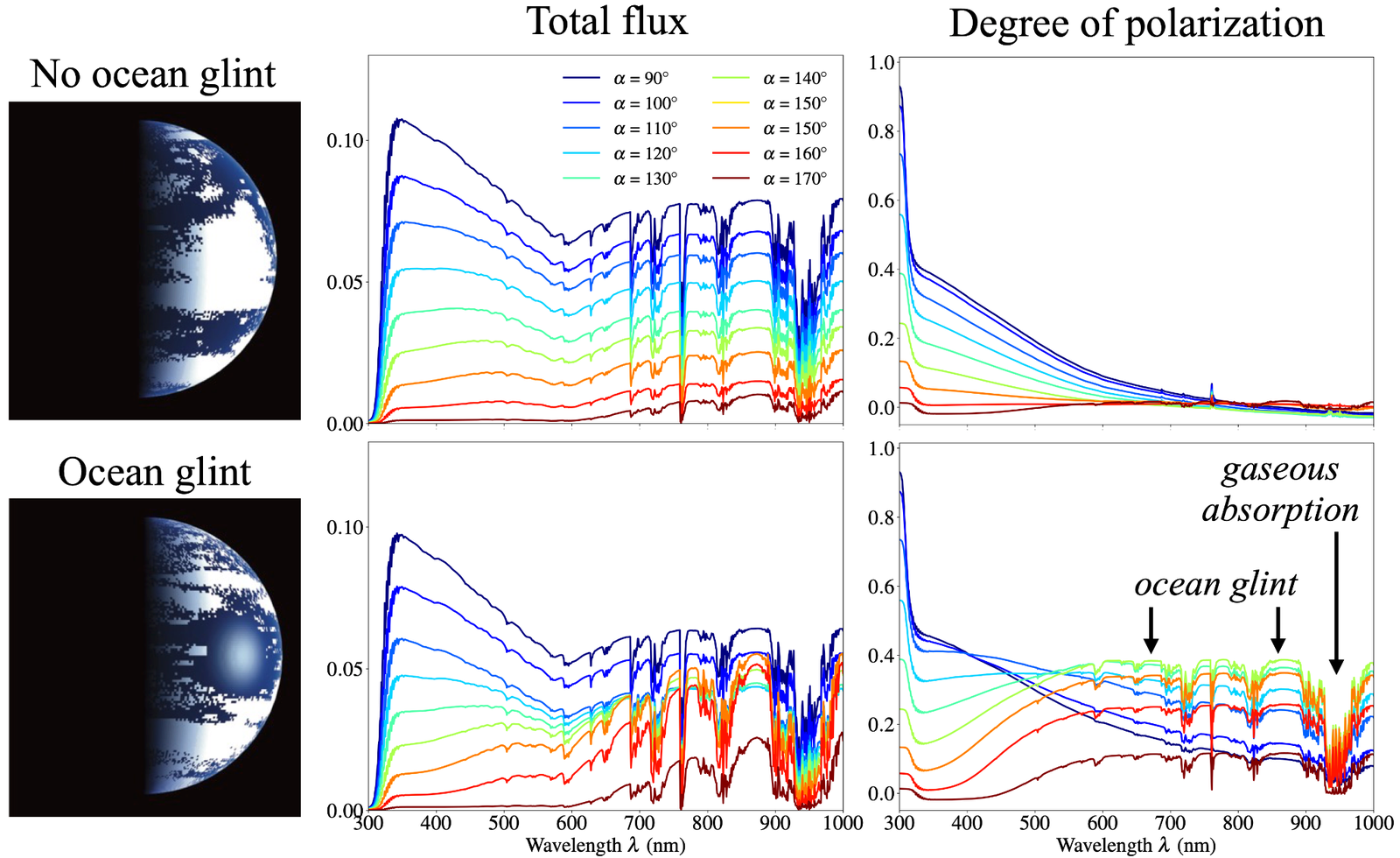
This paper predicts how liquid-water oceans can imprint observable signatures in the total flux and polarisation spectra of Earth-like exoplanets. It is one of the main links between my radiative-transfer work and the search for habitable worlds.

What the figure shows. The figure compares spectra of Earth-like exoplanets with and without ocean glint. In total flux the ocean signal can be subtle, but in polarisation the glint can become a much cleaner diagnostic because ocean reflection is strongly polarised.

Why it matters. This is one of the key results in my exoplanet work: it shows how liquid-water oceans could be inferred from unresolved reflected starlight. The implication is that polarimetry can add information about habitability that would be difficult to extract from brightness alone.

Total flux and degree of polarisation spectra for Earth-like exoplanets with and without ocean glint
Ocean glint changes both total flux and degree of polarisation spectra of Earth-like exoplanets. Figure adapted from Trees & Stam (2022).

2020 路 Astronomy & Astrophysics

Colors of an Earth-like exoplanet. Temporal flux and polarization colors of the Earth

A. Groot, L. Rossi, Victor J. H. Trees, J. C. Y. Cheung, and Daphne M. Stam

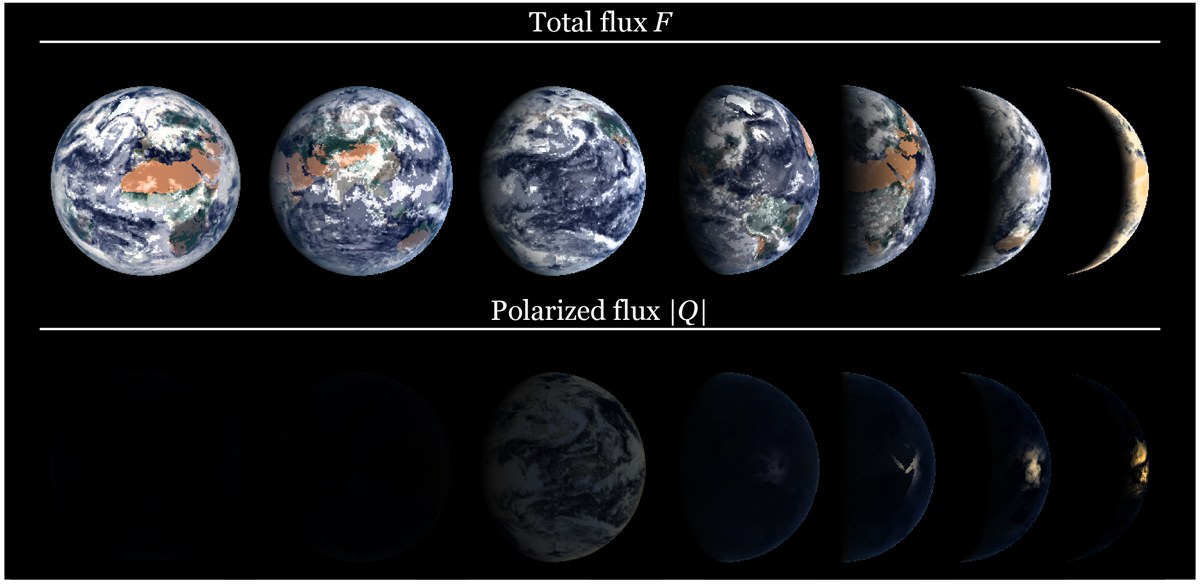
This paper studies how the changing appearance of Earth can inform the interpretation of unresolved Earth-like exoplanets. Flux and polarisation colors provide complementary information about clouds, surfaces, and oceans.

Total flux and polarised flux of Earth at different phase angles
Earth as an unresolved exoplanet: total flux and polarised flux change with phase angle. Figure adapted from Groot et al. (2020).

2019 路 Astronomy & Astrophysics

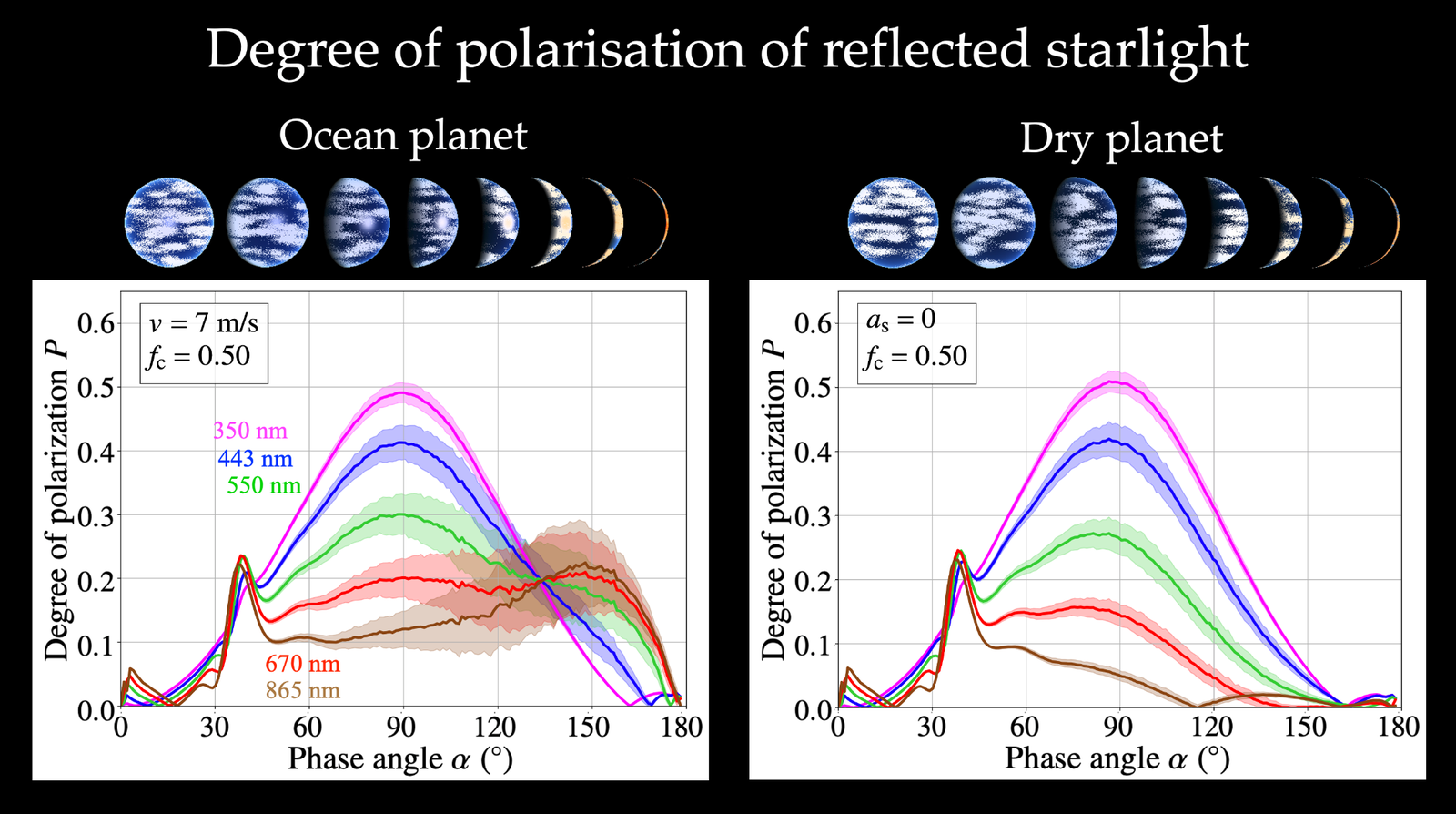
Blue, white and red ocean planets. Simulations of orbital variations in flux and polarization colors

Victor J. H. Trees and Daphne M. Stam

This paper explores how ocean color and viewing geometry affect the flux and polarisation colors of ocean planets. It laid part of the groundwork for using polarisation to search for liquid water on exoplanets.

What the figure shows. The figure compares the polarisation of ocean and dry planets over an orbit. The planet images and curves show how ocean colour, clouds, surface reflection, and phase angle combine into different polarimetric fingerprints.

Why it matters. This paper laid the groundwork for my later ocean-detection work. It showed that polarisation colours are not just a visual classification tool: they can help separate ocean-bearing planets from dry planets when total flux colours alone are ambiguous.

Degree of polarisation of reflected starlight for ocean and dry planets
Degree of polarisation of reflected starlight for ocean and dry planets, showing how ocean properties and viewing geometry affect observables. Figure adapted from Trees & Stam (2019).