News

Selected updates on publications, software, talks, conferences, and workshops. Older media coverage is collected with the relevant publications on the Publications page.

27 May 2026

MONKI used at KNMI to study 3D cloud effects in weather satellite measurements

MONKI was used in a study led by Job Wiltink to quantify how three-dimensional cloud-radiation interactions affect satellite-based estimates of global horizontal irradiance: the amount of sunlight that reaches the surface on a horizontal plane.

Such 3D effects are often hidden within large satellite pixels. Light can be transported horizontally between cloudy and cloud-free parts of a scene, and cloud shadows can reduce the radiation that reaches the surface. As new geostationary weather satellites observe clouds with smaller pixels, these effects become increasingly important for interpreting and correcting satellite-based irradiance products.

The study combines MONKI with realistic cloud fields from MicroHH, a large-eddy simulation cloud model, and shows how pixel size, cloud structure, and horizontal photon transport shape the retrieved signal.
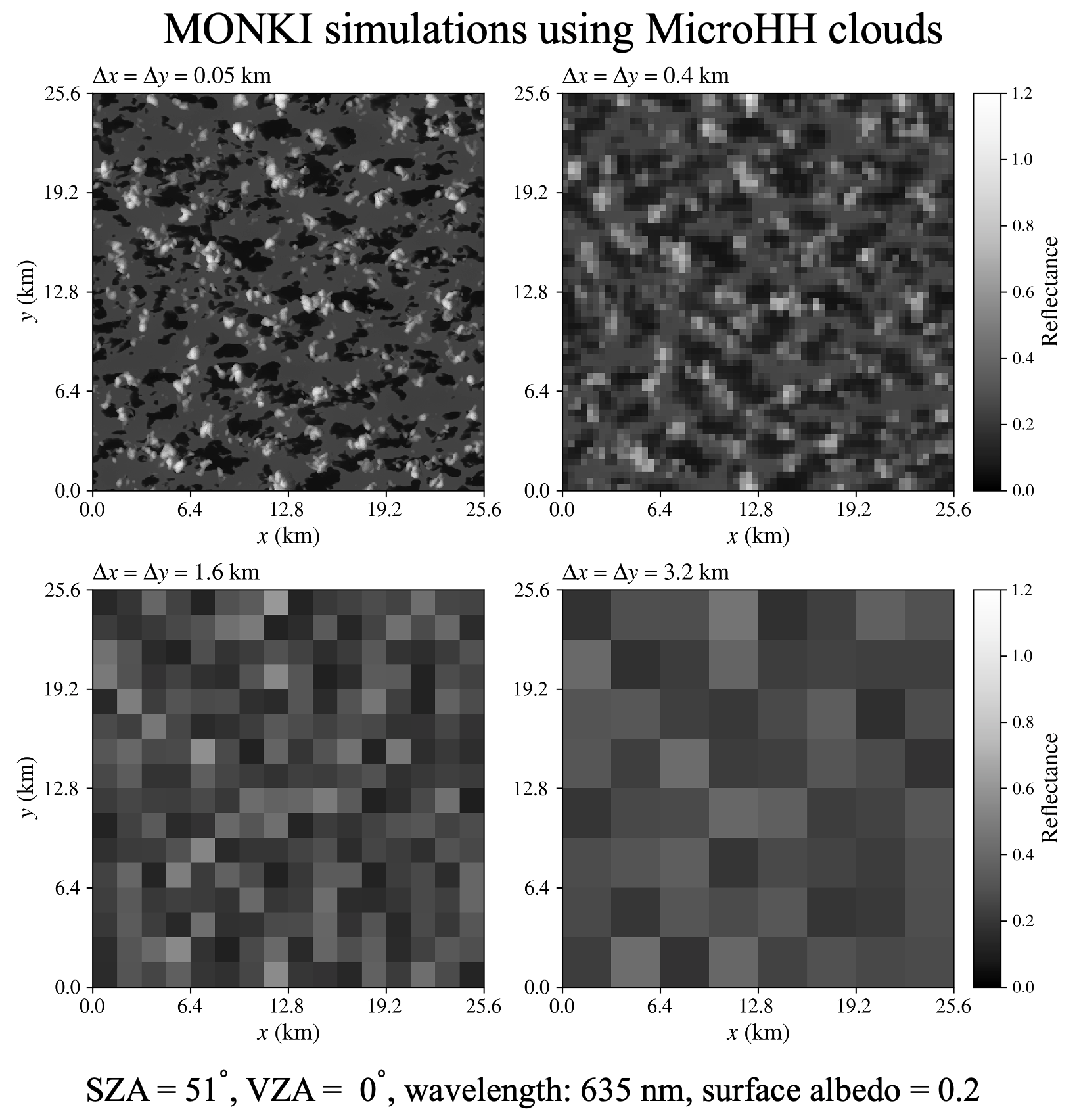
MONKI simulations using MicroHH cloud fields at different horizontal resolutions
MONKI simulations with cloud fields from MicroHH, a large-eddy simulation cloud model, at different horizontal resolutions. Figure adapted from Wiltink et al. (2026).

9–13 February 2026

Venus habitability workshop at the Lorentz Center

I spent the full week at the Lorentz Center in Leiden for the workshop “Roadmap to the Exploration of Venus Habitability”. The meeting brought together researchers working on Venus geology, interior structure, atmospheric evolution, and future mission concepts.

We discussed which observations and mission strategies are needed to understand how Venus evolved and whether it may once have been habitable. I contributed from the perspective of reflected-light modelling and argued for polarimetry as a way to constrain Venus’s clouds, hazes, and atmospheric structure.

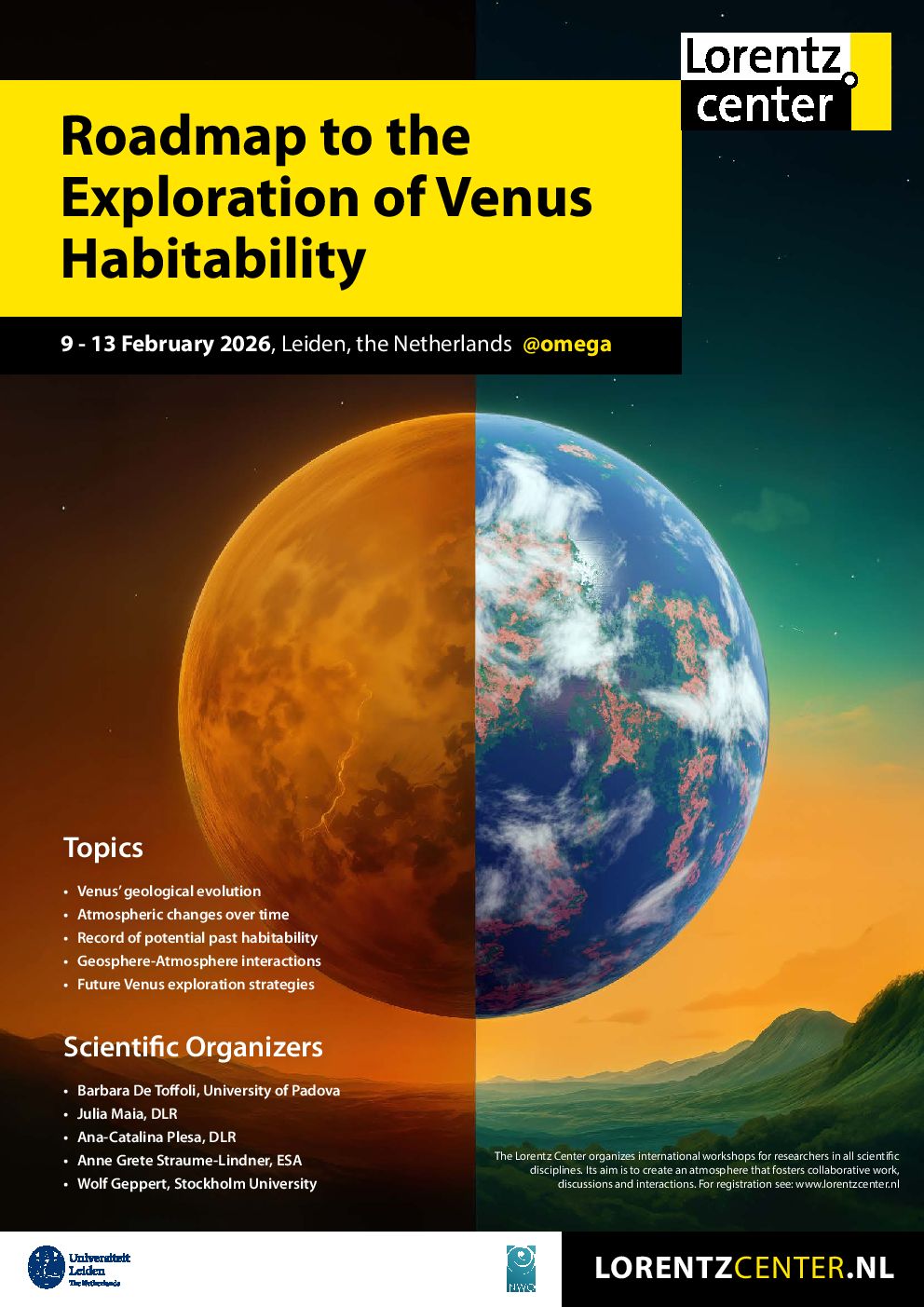
Poster for the Lorentz Center workshop Roadmap to the Exploration of Venus Habitability
Poster for the Lorentz Center workshop Roadmap to the Exploration of Venus Habitability. Credit: Lorentz Center.

14 July 2025

MONKI preprint published in EGUsphere

The MONKI preprint is available on EGUsphere. The paper presents MONKI from the radiative-transfer equations to the numerical implementation, including polarisation-dependent sampling, forward and backward Monte Carlo modes, and validation against established benchmark models.

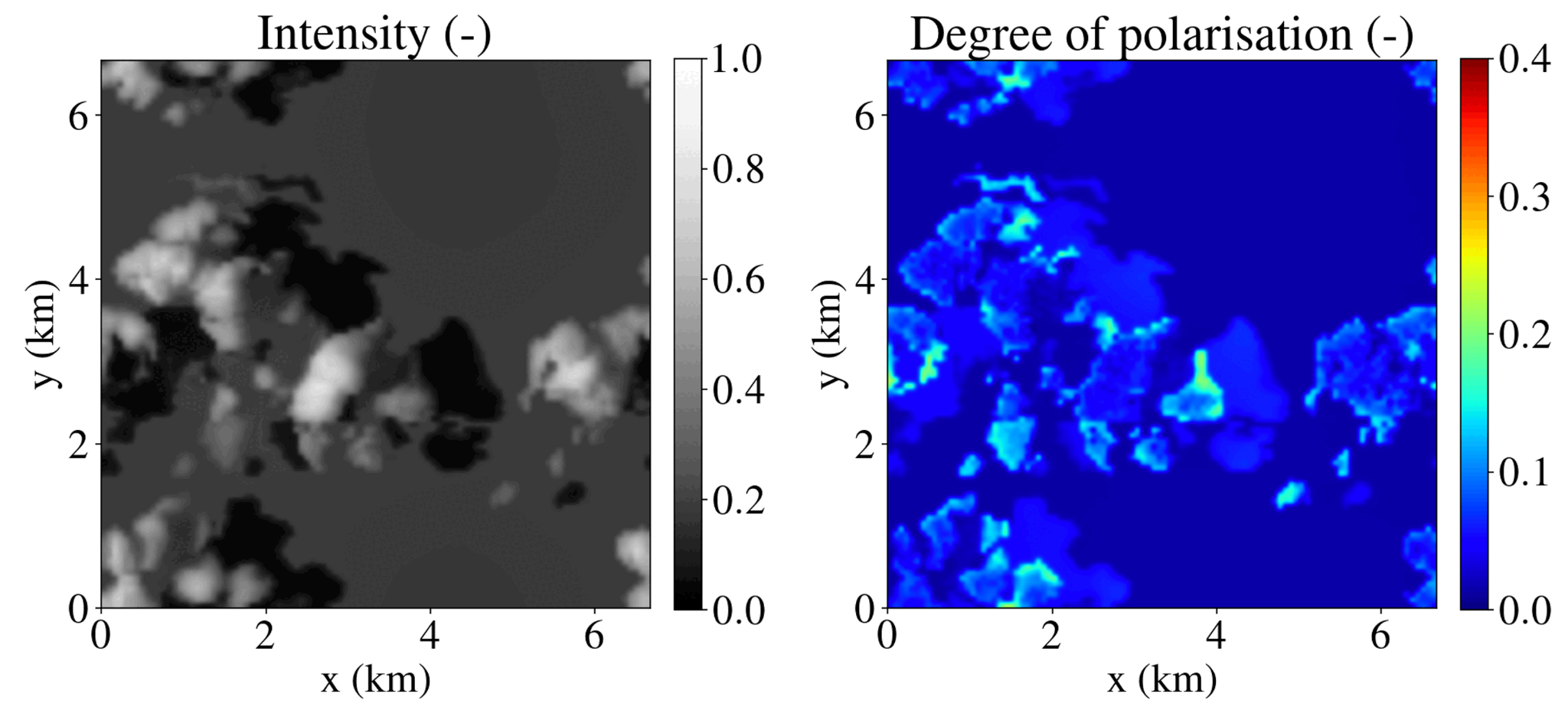
MONKI computes total and polarised radiation reflected by planetary atmospheres and can handle both horizontally homogeneous scenes and three-dimensional cloudy atmospheres. The paper also includes sample simulations for Earth and Venus, showing how the altitude of photon scattering helps explain features in the total and polarised reflected-light signals.

MONKI simulation of intensity and degree of polarisation for a 3D cloudy atmosphere
MONKI simulation of intensity and degree of polarisation in a 3D cloudy atmosphere. Figure by Victor J. H. Trees.

30 April 2025

Modelling Venus’s spectropolarimetric signatures for EnVision

I presented MONKI simulations of Venus reflected-light spectra and polarisation at the EGU General Assembly in Vienna. The simulations support the interpretation of future VenSpec-U and VenSpec-H measurements by ESA’s EnVision mission.

The results show how Venus’s clouds, hazes, gaseous absorption, Rayleigh scattering, and viewing geometry shape the measured fluxes and polarisation. This work is part of adapting MONKI for Venus, including challenging twilight and limb geometries that are relevant for future mission observations.

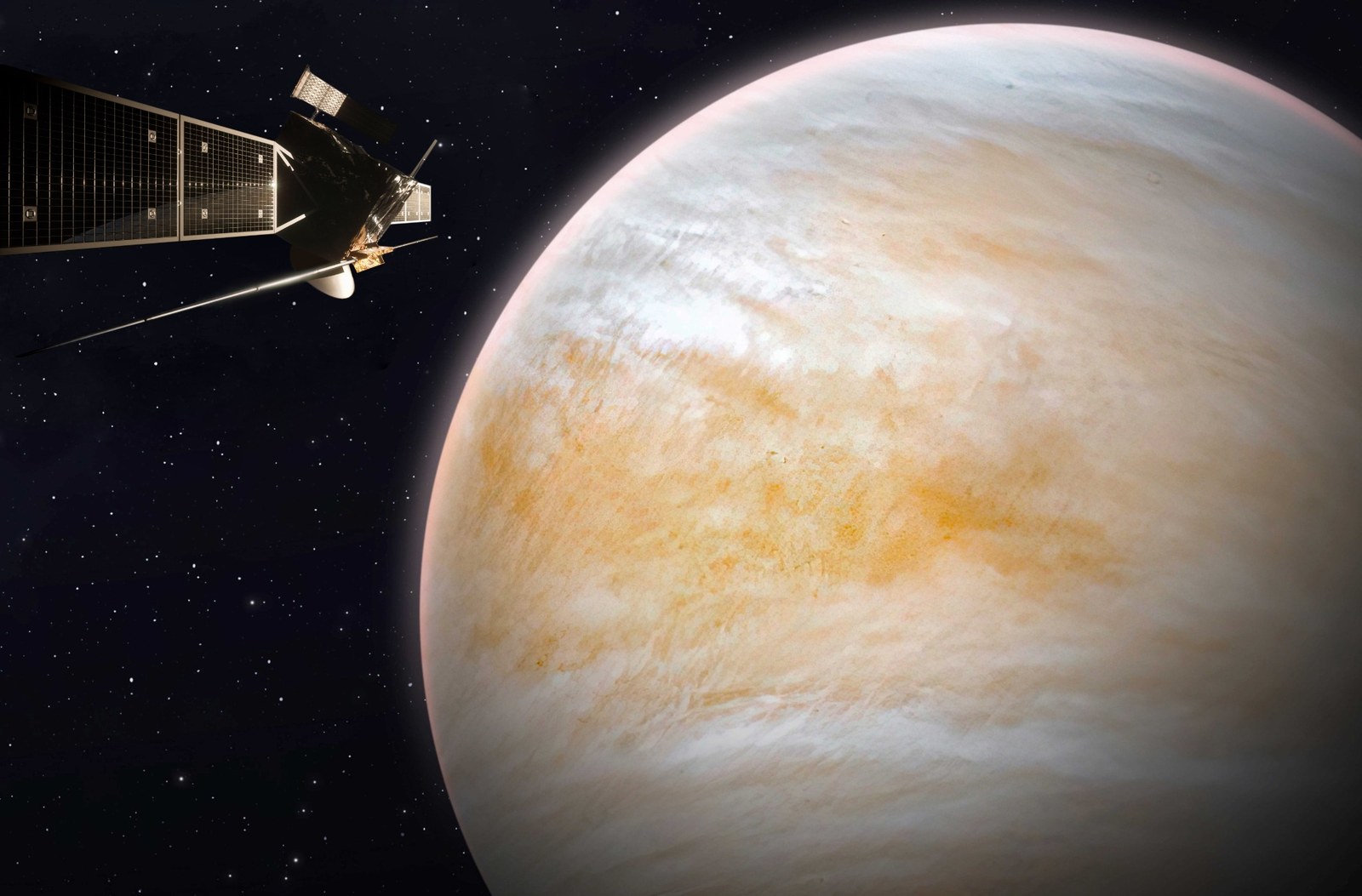
Artist impression of ESA's EnVision mission at Venus
Artist impression of ESA’s EnVision mission at Venus. Credit: ESA/Paris Observatory/VR2Planets & NASA/JPL-Caltech.